




Our Repair & Restoration Portfolio
Explore a small selection of our completed projects, showcasing our expertise in repair and restoration.
Based on actual customer invoices.
ARP Odyssey Repair and Service
Serial#: 28231268
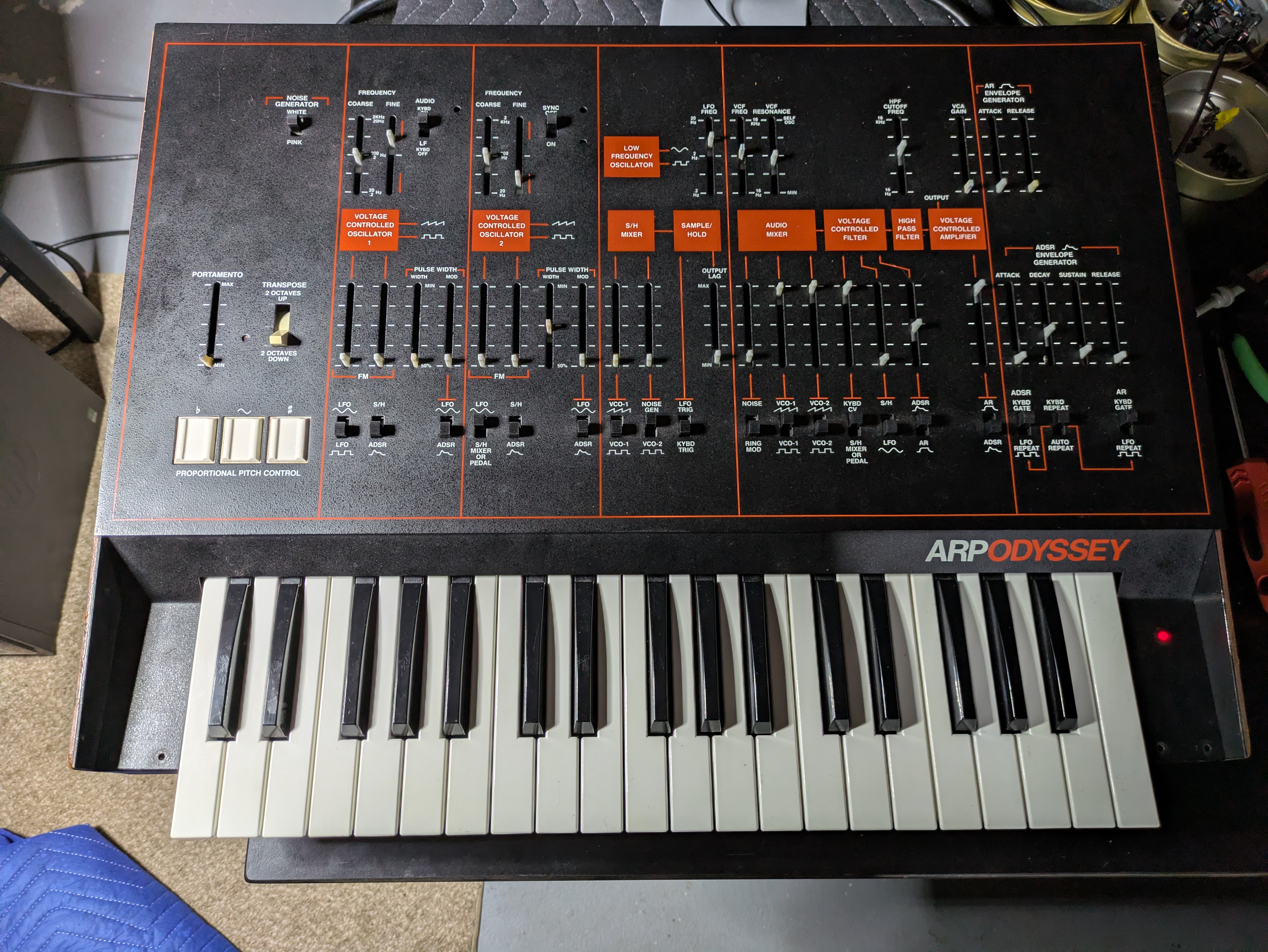
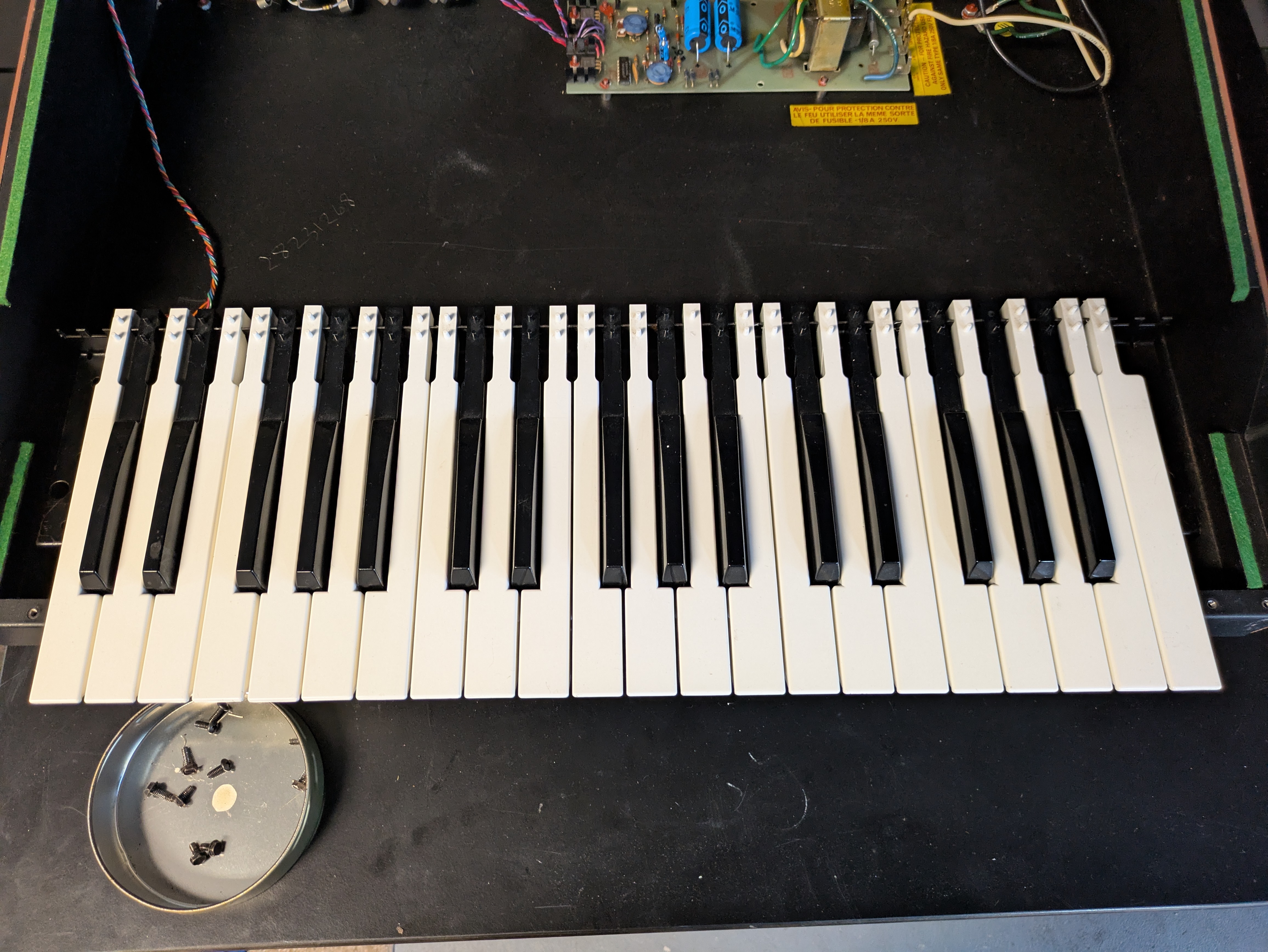
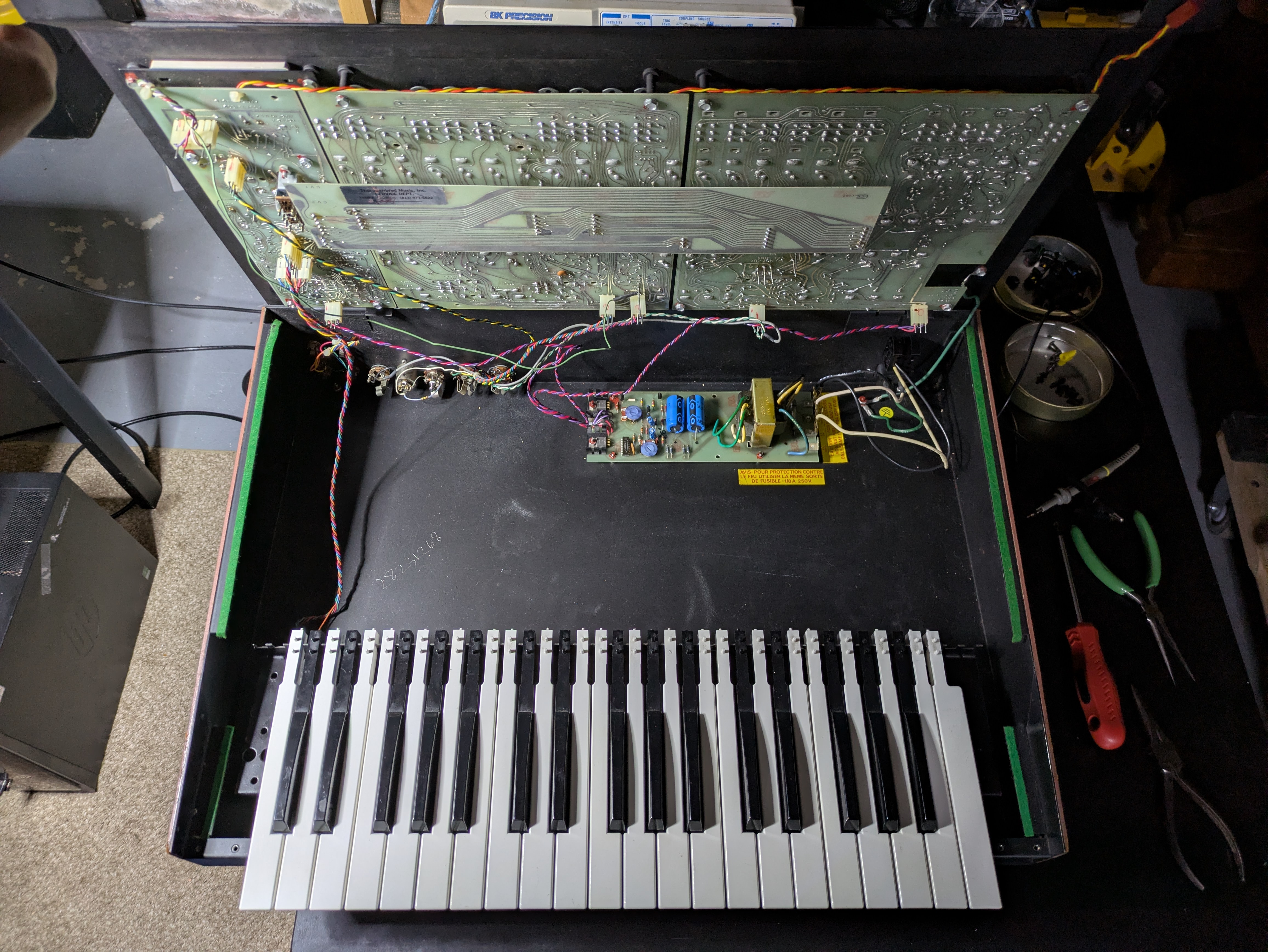
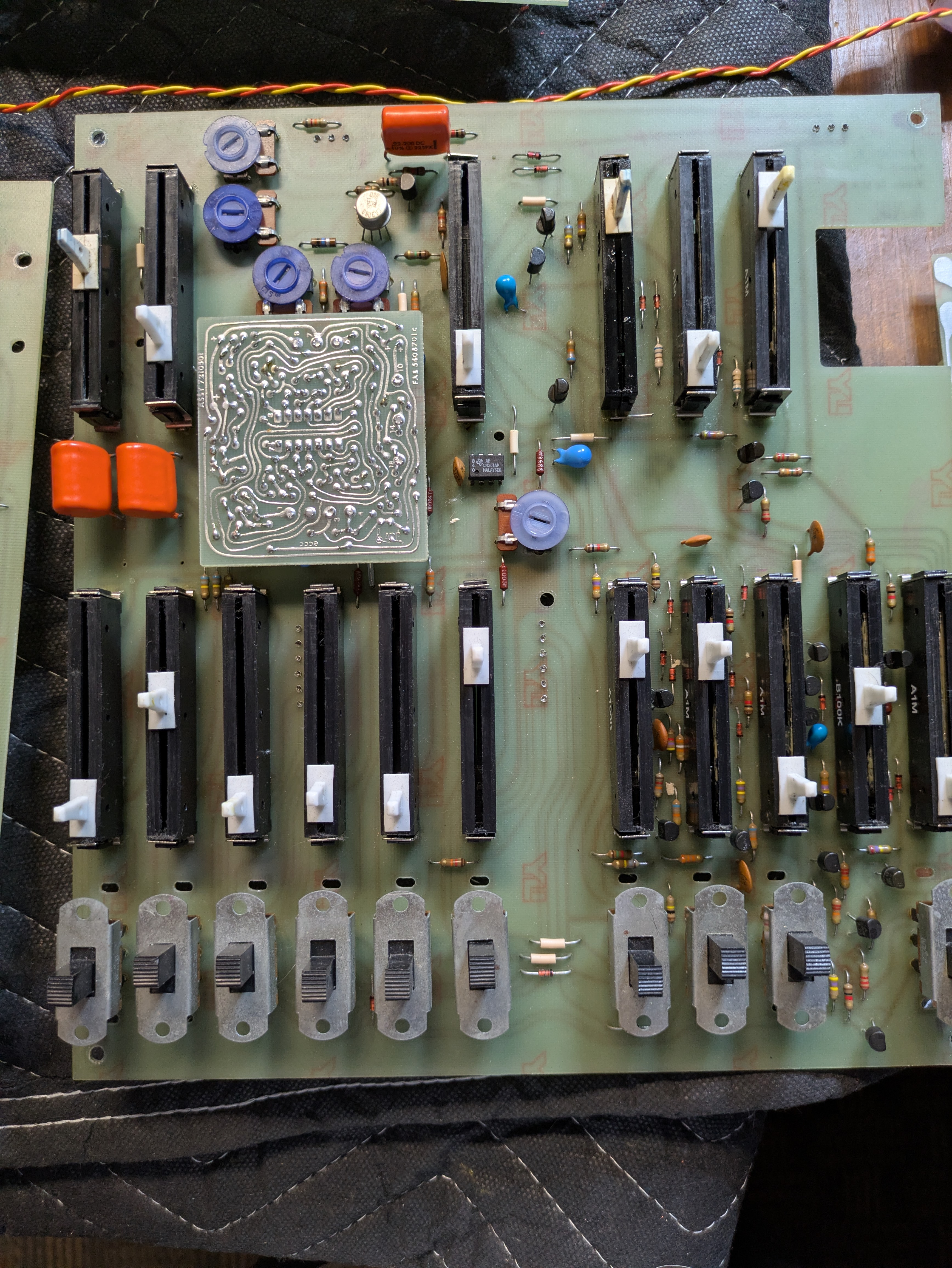
Customer Report
Recent used purchase. Several keys exhibited wild/unstable behavior ("whoop wildly"). Highest C key was broken (broken piece provided by customer). Requested full inspection, keyboard repair, calibration, and recapping of electrolytic and tantalum capacitors.
Pre-fulfillment Notes
Late-model ARP Odyssey (Mk III, 2823 series). Keyboard action inconsistent due to worn bushings, dirty contacts, and one damaged J-wire. Power supply electrolytics and tantalums showed typical age-related degradation. Faders and switches needed cleaning and lubrication. High-C key physically broken but piece retained for repair.
Operations Performed
- Keyboard Repair and Regulation:
- Replaced all key bushings and relubricated with Molykote
- Regulated, leveled, and properly spaced the entire keyboard
- Repaired single damaged J-wire on high-C key using gold-plated copper wire
- Successfully reglued broken high-C key
- Thoroughly cleaned each key contact with 91% isopropyl alcohol
- Recapping and Power Supply:
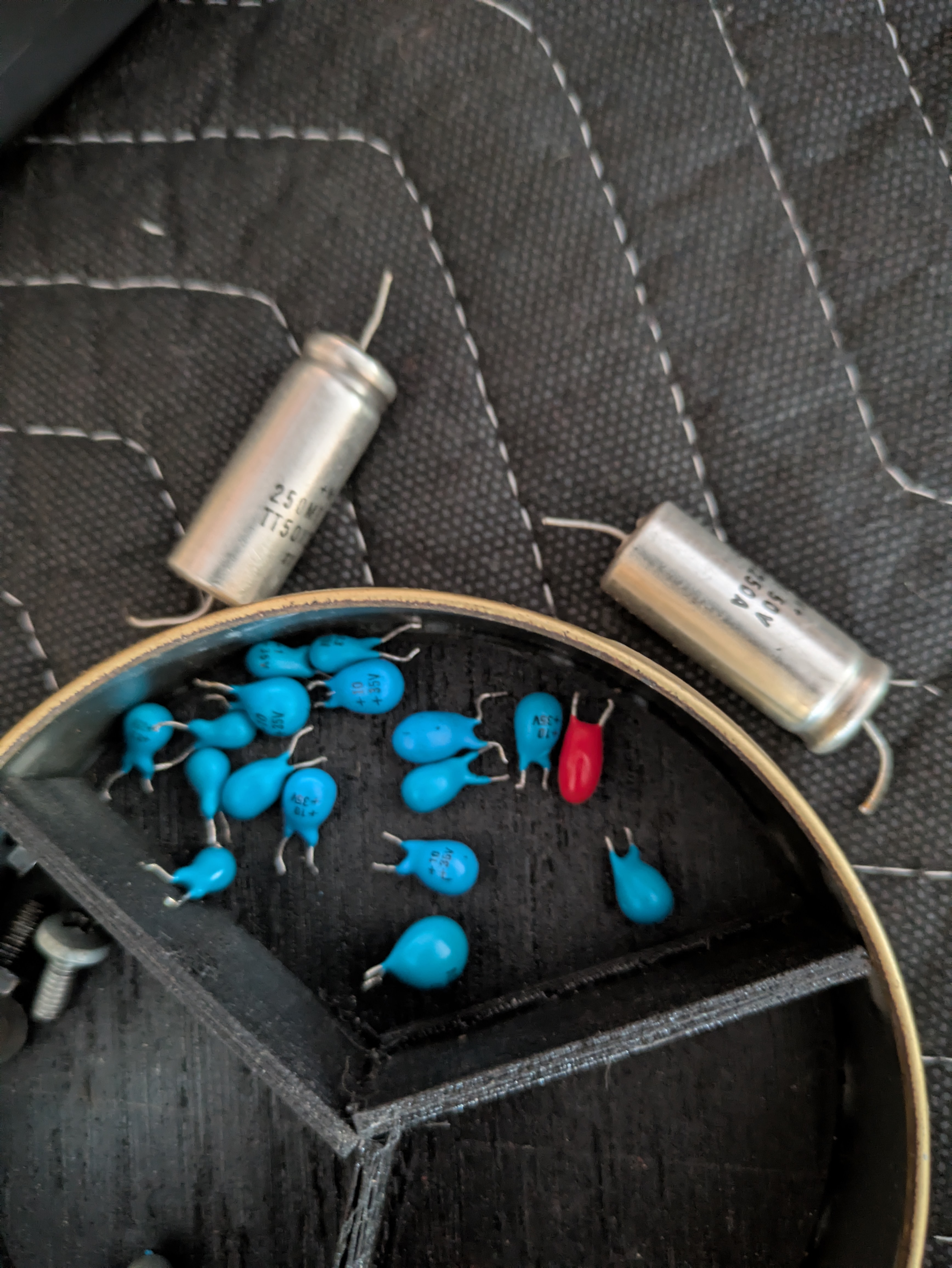
- Replaced all tantalum capacitors
- Replaced power supply electrolytic capacitors
- Controls and Cleaning:
- Cleaned and treated all faders and switches
- Calibration and Final Setup:
- Performed full calibration as outlined in ARP Odyssey service manual
Post-fulfillment Notes
Unit now in excellent playable condition with smooth, consistent keyboard action, stable tuning, and reliable operation. This comprehensive service addresses common age-related failures in vintage ARP Odysseys (capacitor drift, keybed wear, dirty controls).
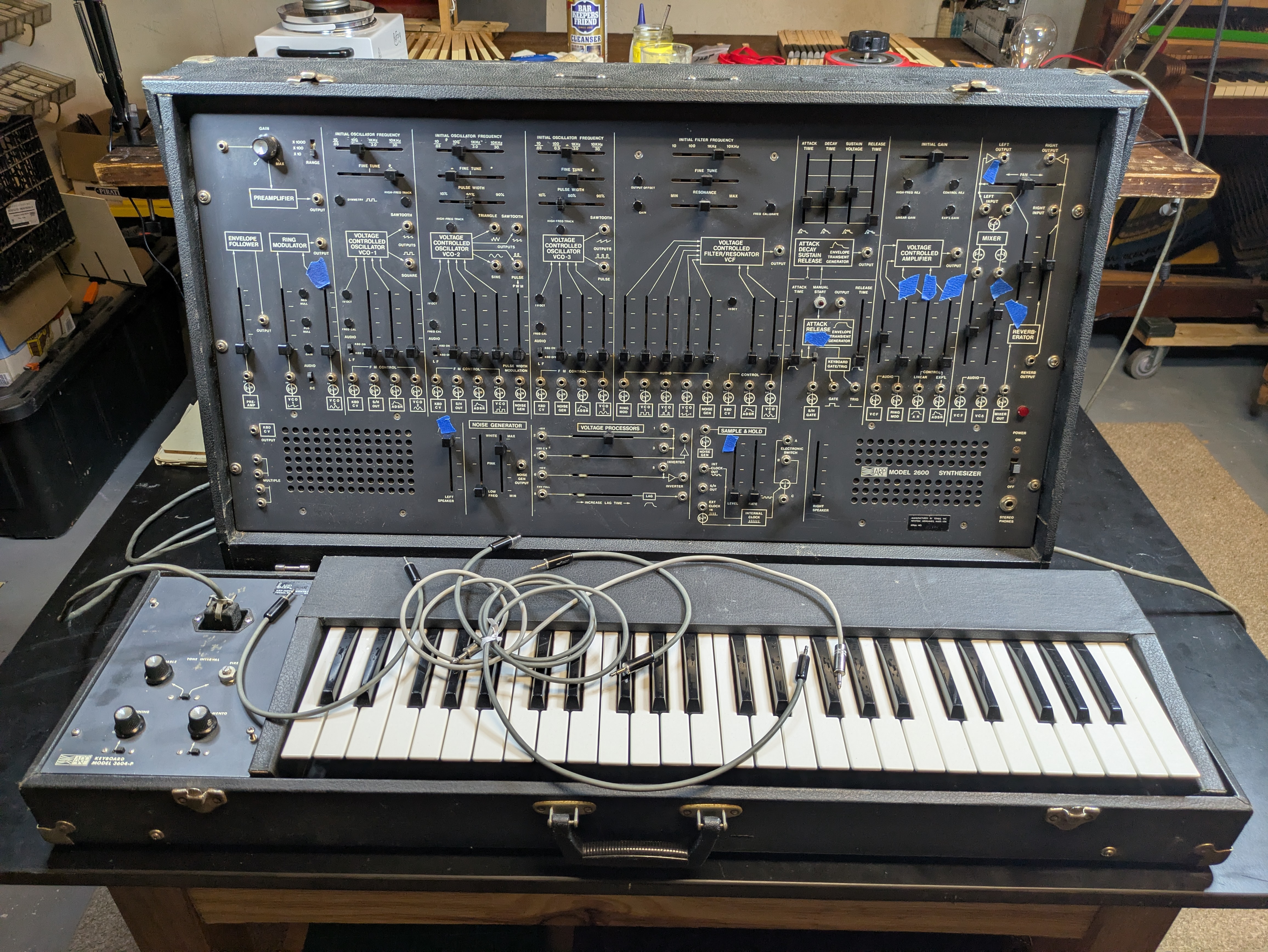
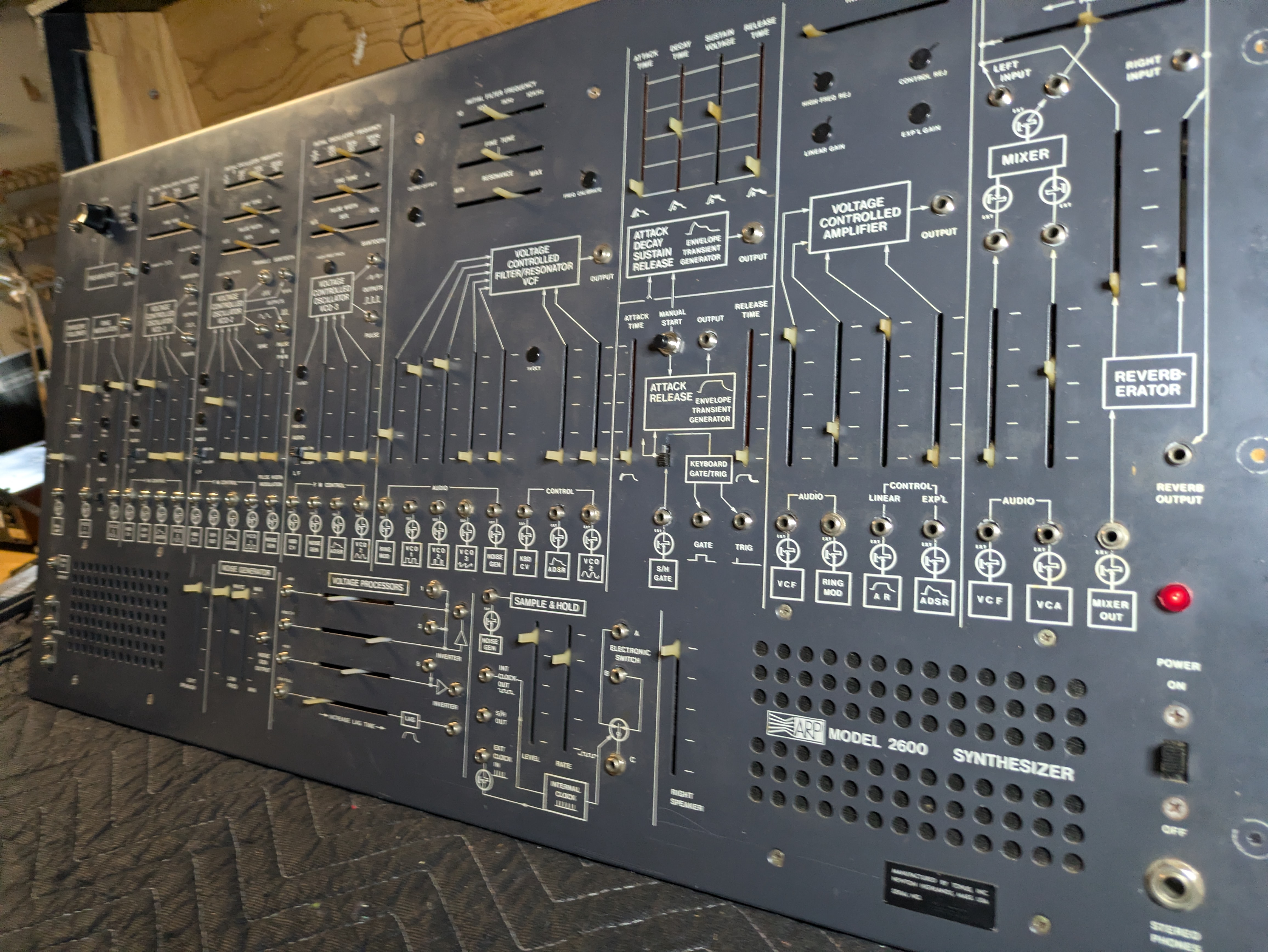
ARP 2600 Repair (Phases 1 & 2)
Serial#: 26372
Customer Report
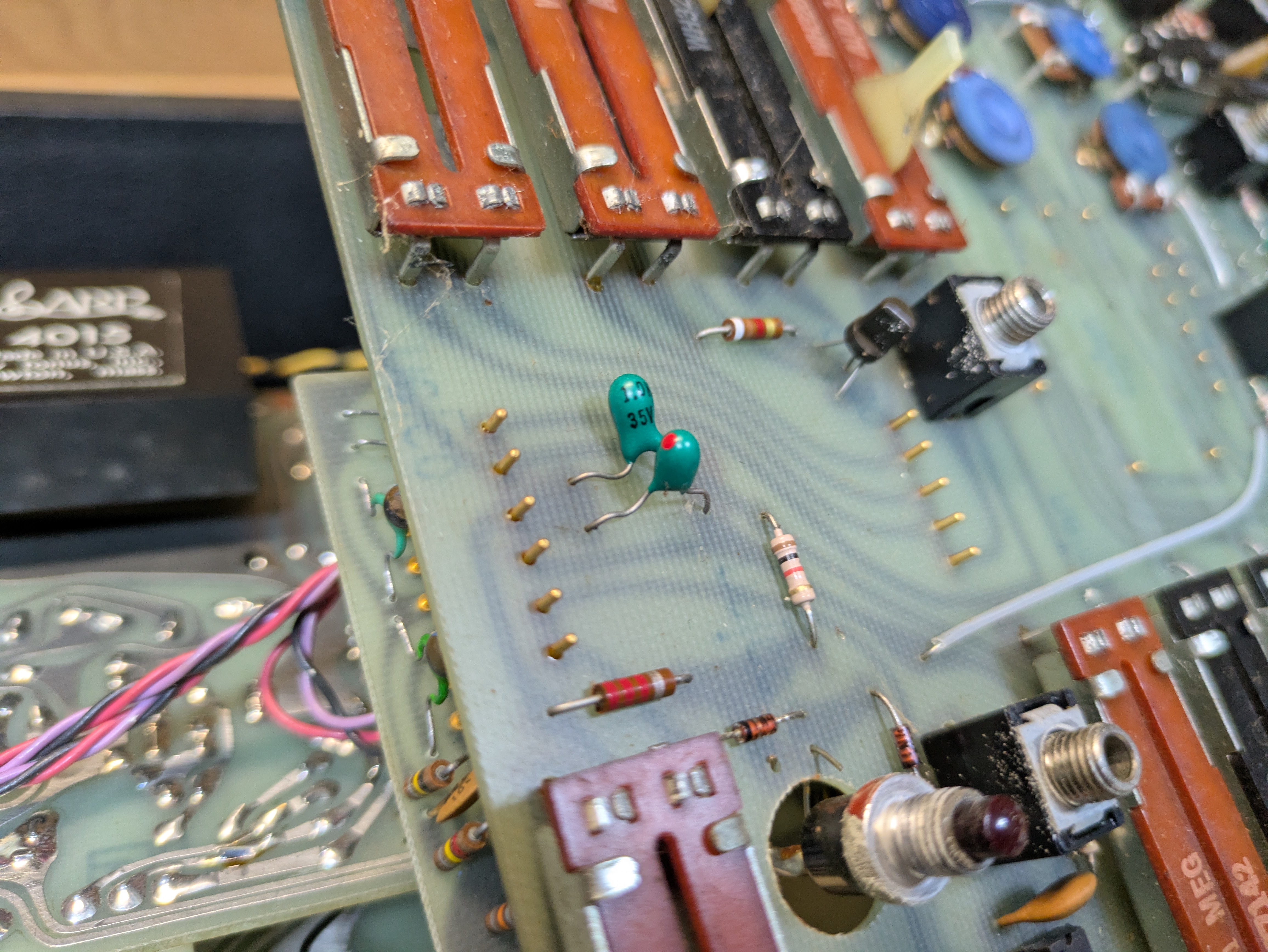
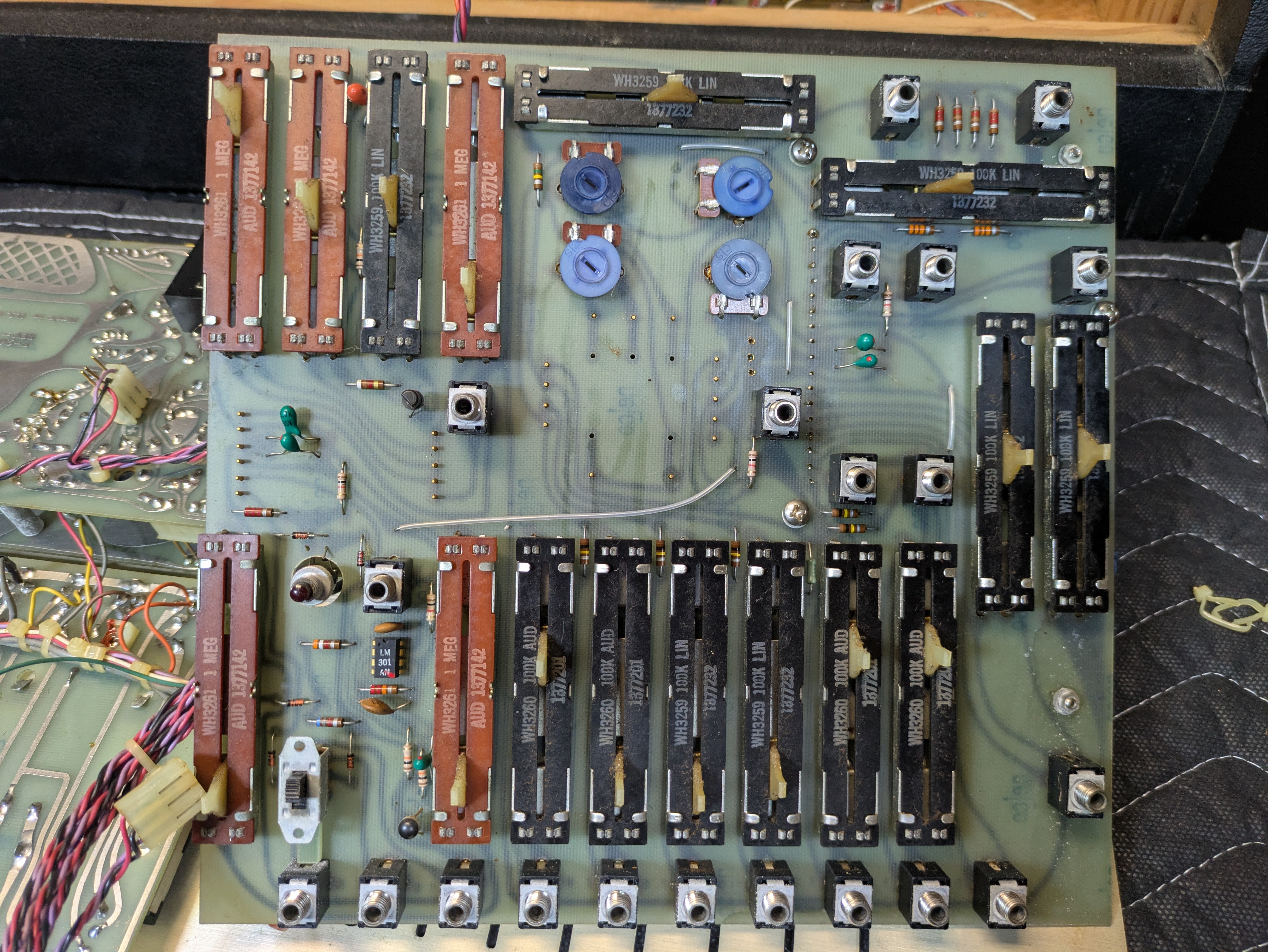
Multiple module failures including loss of Sample and Hold, left speaker output, reverb, envelope generator, VCA, ring modulator, and mixer section. Requested full recapping of tantalum capacitors, power supply recap, replacement of all LM301 op-amps with equivalents and sockets for easy future swaps. Follow-up phase to complete remaining op-amp upgrades and address additional issues.
Pre-fulfillment Notes
Vintage ARP 2600 (early-to-mid 1970s). Extensive age-related degradation typical of the era: shorting/failing tantalum capacitors causing power rail issues and module dropouts, degraded LM301 op-amps leading to noisy or non-functional circuits (S/H, envelopes, VCO waveforms), worn power supply components (electrolytics, transistors, rectifier), and mechanical issues (screw holes, etc.). Initial phase focused on broad recapping and op-amp swaps; second phase targeted remaining boards and power section fixes.
Operations Performed
- Recapping and Component Replacement:
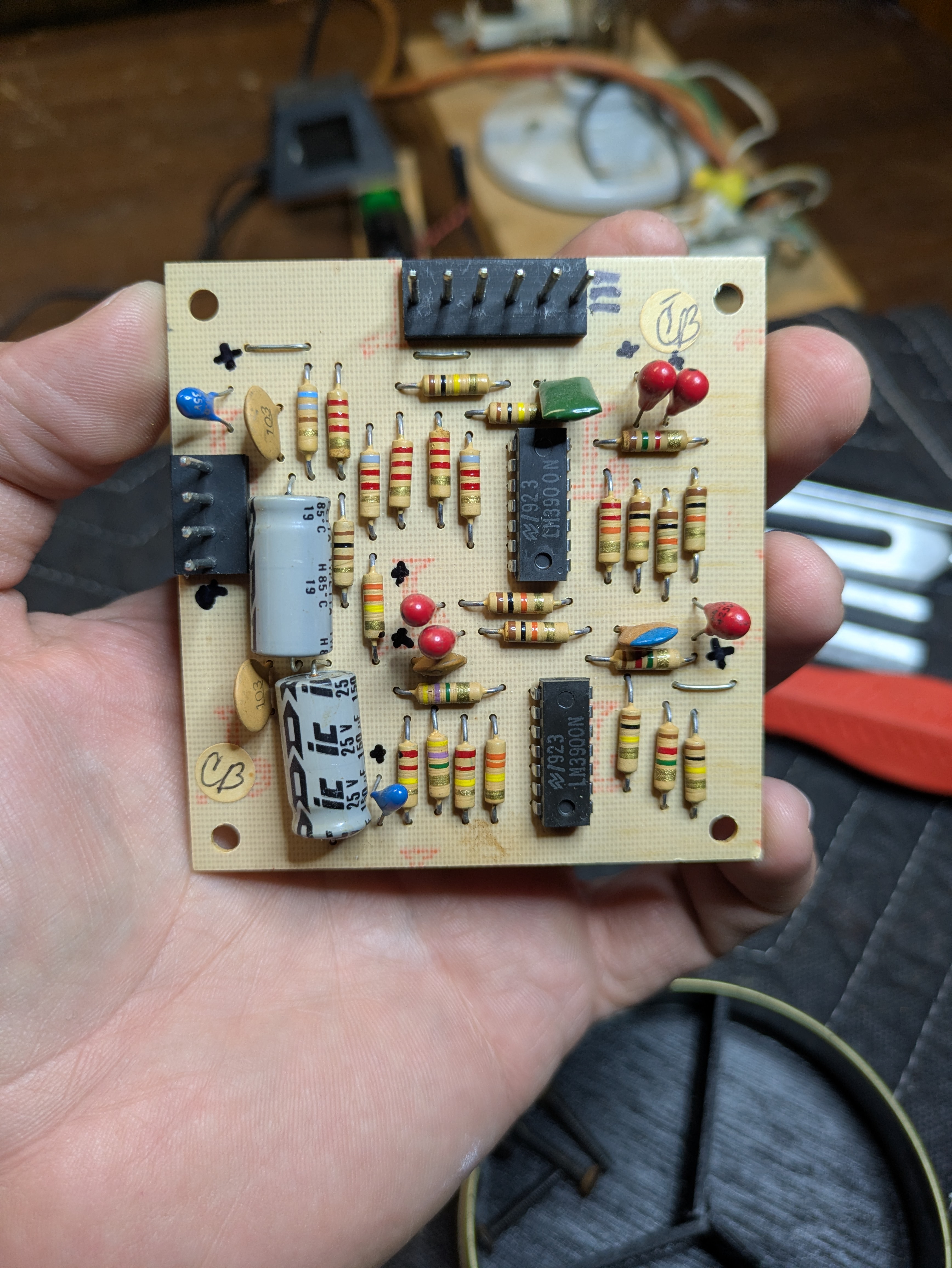
- Replaced approximately 30 tantalum capacitors with electrolytic equivalents
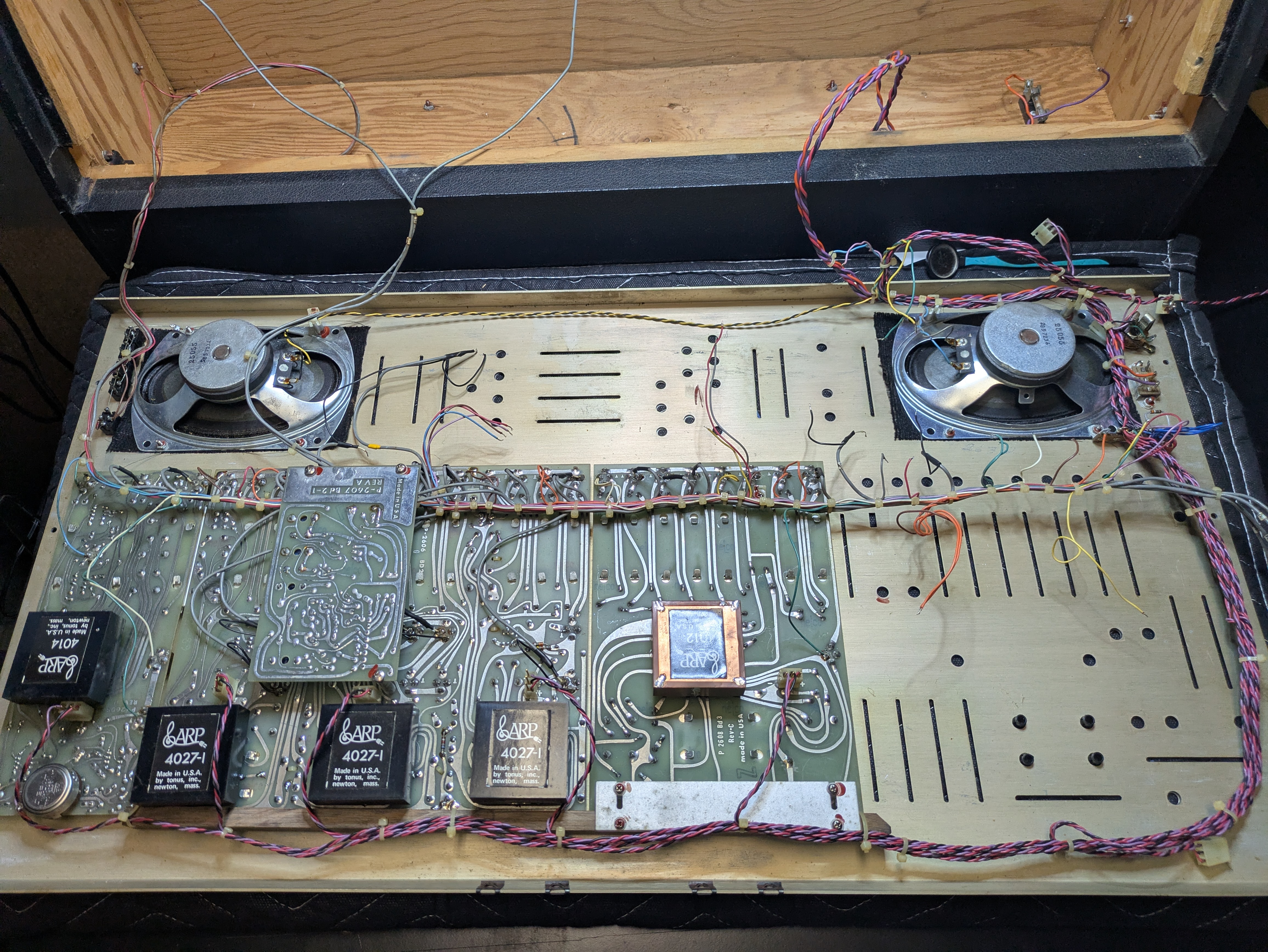
- Replaced all electrolytic capacitors in the power supply
- Replaced a handful of broken carbon resistors discovered during disassembly
- Op-Amp Upgrades:
- Replaced ~30 LM301 op-amps with socketed equivalents (initial phase)
- Swapped select LM301s with upgraded op-amps on VCO2 waveform board, noise board, and keyboard PCB (Phase 2)
- Clipped associated capacitors as needed for op-amp upgrades
- Power Supply and Related Repairs:
- Replaced power transistors, bridge rectifier, and new thermal paste
- Fixed stripped screw holes under PSU and replaced broken screws
- Circuit Fixes and Calibration:
- Fixed preamplifier circuit and Pulse wave of VCO3
- Performed full calibration per service manual specifications
Post-fulfillment Notes
Unit now fully operational with restored functionality across all major sections (S/H replaced via Synthchaser module where needed, stable power, clean waveforms, reliable envelopes/VCA/etc.). Comprehensive servicing addresses common vintage ARP 2600 failures (tantalum shorts, op-amp drift, PSU wear). Future considerations could include full fader cleaning/lubrication, re-tolex/hardware refresh, power jack upgrade to IEC standard, additional mods (second reverb tank, OSC sync, octave switches), or strategic op-amp upgrades on remaining daughter boards. Further refurbishment of the 3604 keyboard is also recommended.
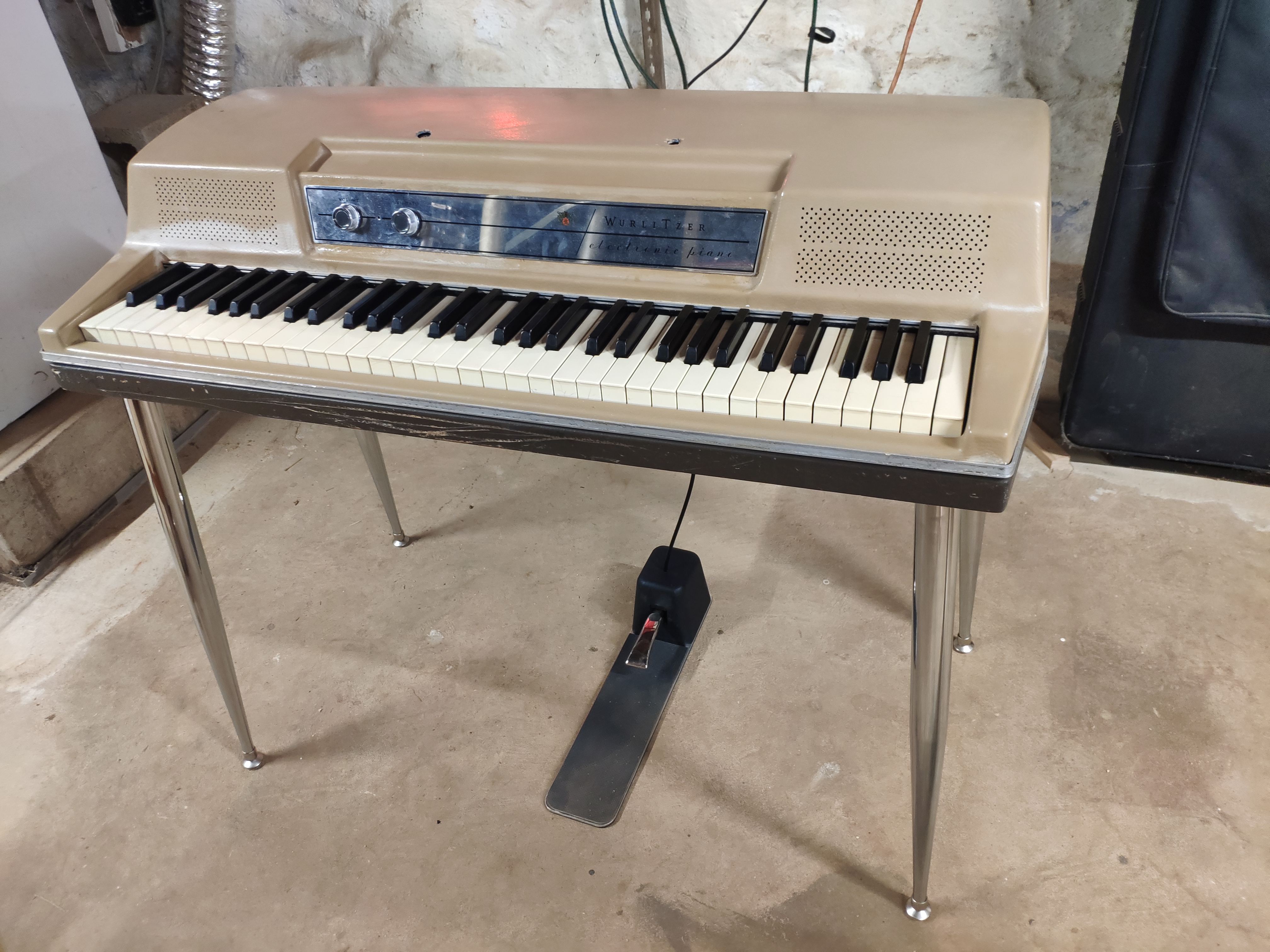
Wurlitzer 206 Repair and 206/200 Upgrade
Serial#: 50695
Customer Report
Wurly is distorted at low volumes, missing vibrato knob, vibrato function not working, AUX output non-functional. Requested removal of console base, replacement of sustain pedal with aftermarket unit, and addition of aftermarket legs. Tuning of F3 and A4 needs attention.
Pre-fulfillment Notes
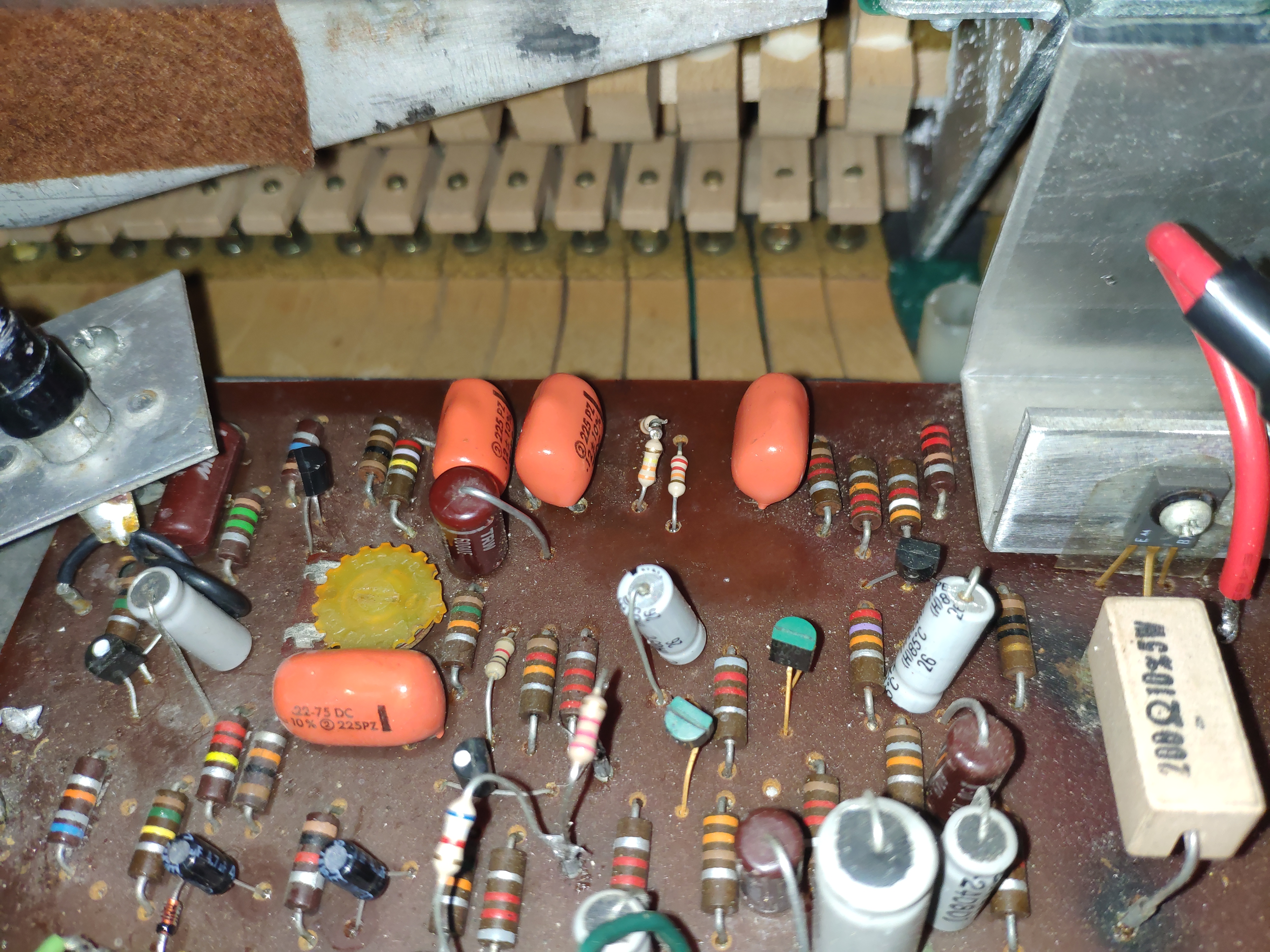
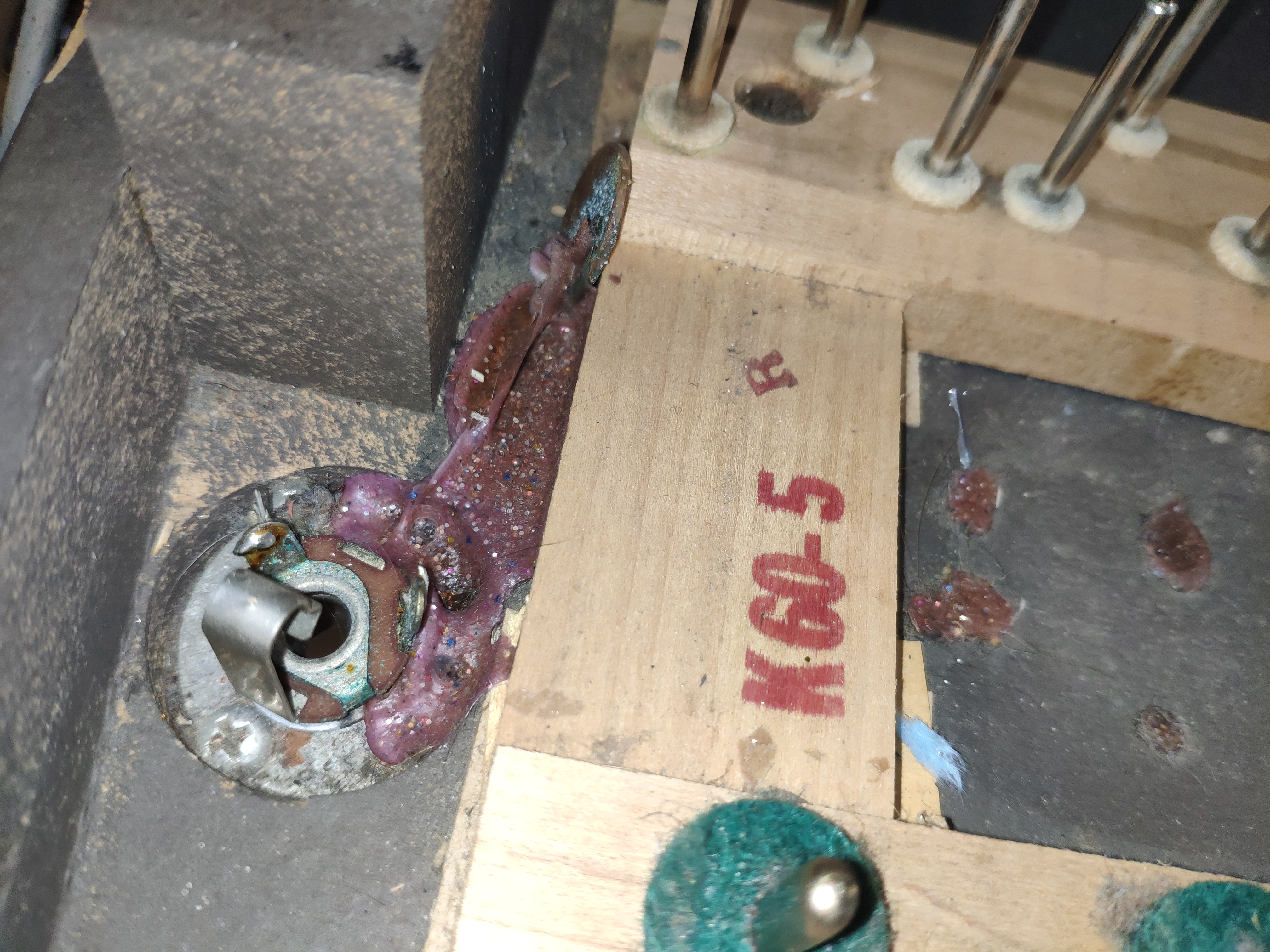
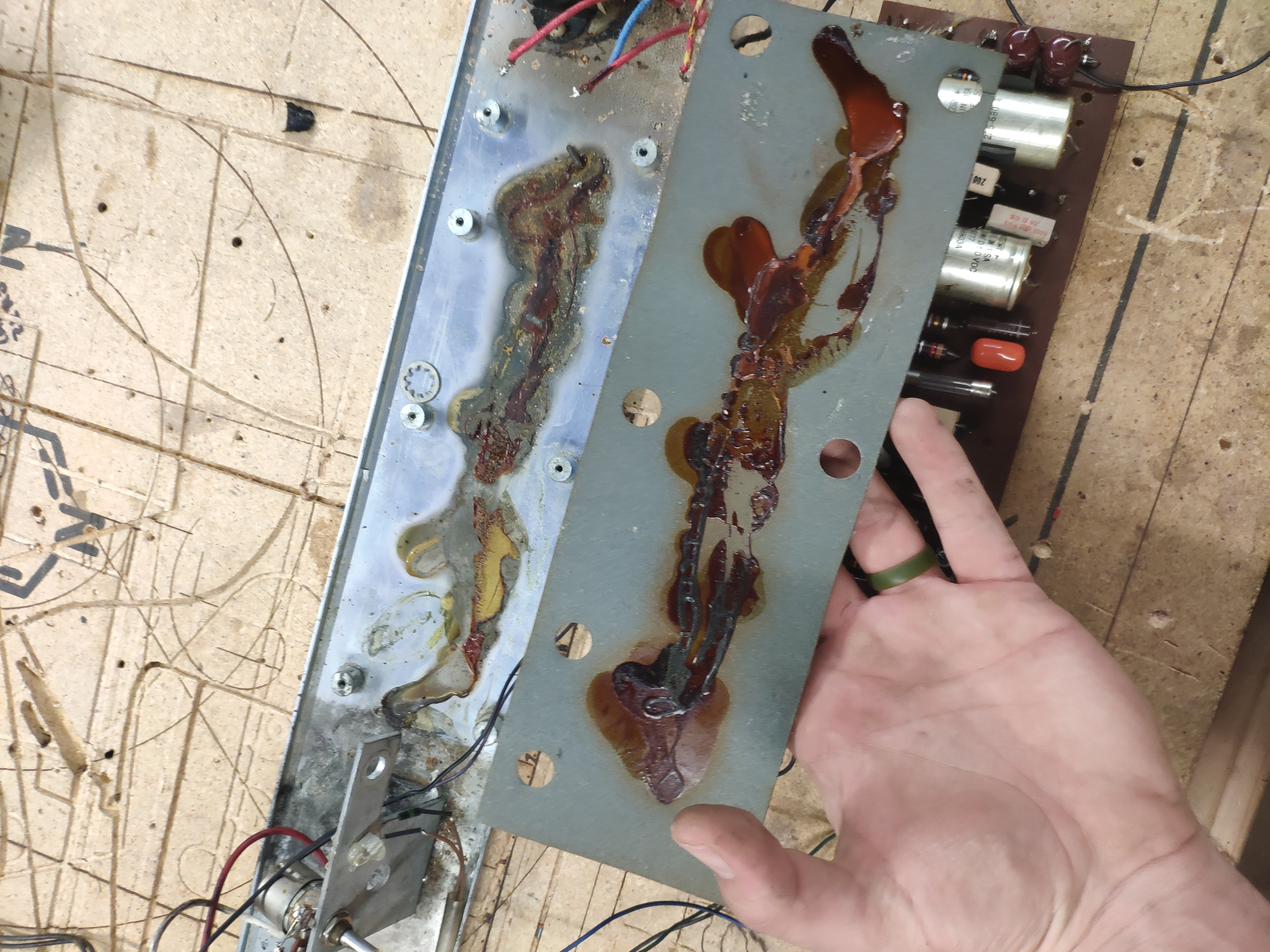
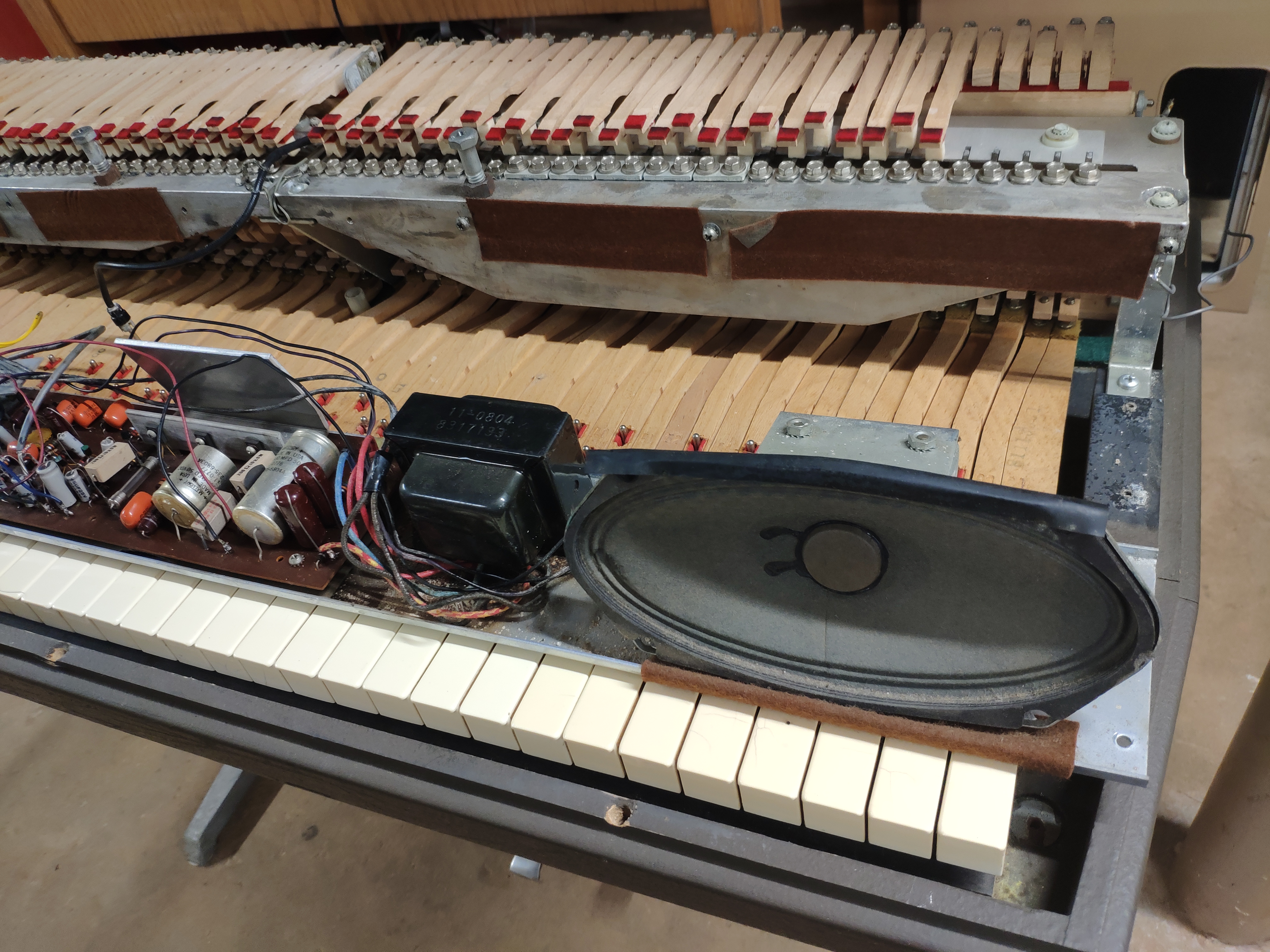
Unit is a 206 Student model. R speaker was damaged. Customer requested replacement of both speakers. Unit needed reasonable cleaning, especially nail polish found between the first 25 keys. Amplifier inspection revealed excessive temperatures on filter capacitor and nearby ceramic resistor. Fuse near TR9 was blown.
Operations Performed
- Wurlitzer 206-to-200 Upgrades:
- Rerouted and twisted AC cables to transformer
- Enabled Vibrato/AUX output
- Installed Vibrato pot and AUX jack
- Removed 206 console base
- Removed 206 wiring and harnesses
- Replaced Speakers
- Installed Leg Brackets and Legs
- Installed new Sustain Pedal
- Installed new hinges (missing)
- Installed new Vibrato knob
- Cleaning:
- Cleaned inside (nail polish on first 25 keys)
- Reglued nameplate
- Reglued lid felt
- Amplifier Repair:
- Replaced 1000uF 50V capacitor (#6)
- Replaced 500uF 50V capacitor (#9)
- Replaced Fuse at TR9 and at mains
- Added fuse holders at mains and TR9
- Replaced TR4, C46, C53, D5 (vibrato circuit)
- Replaced R1, R2
- Replaced R32, R33 (source of problem)
- Tuning and Voicing:
- Eased all key bushings
- Tuned multiple notes
- Lubricated necessary action parts (ProTek)
- Cleaned and polished key posts
- Set key height
- Regulated hammer drops
- Adjusted for lost motion
- Resoldered grounds to reed bar
- Added shims under treble reed bar (dead-ish G)
Post-fulfillment Notes
Potential future operations might include: replacing keytops, deep cleaning hardware, possible felt replacement, replacing PCB pins, full amplifier replacement, stripping and painting lid and body.
Kurzweil K2vx Repair and Service
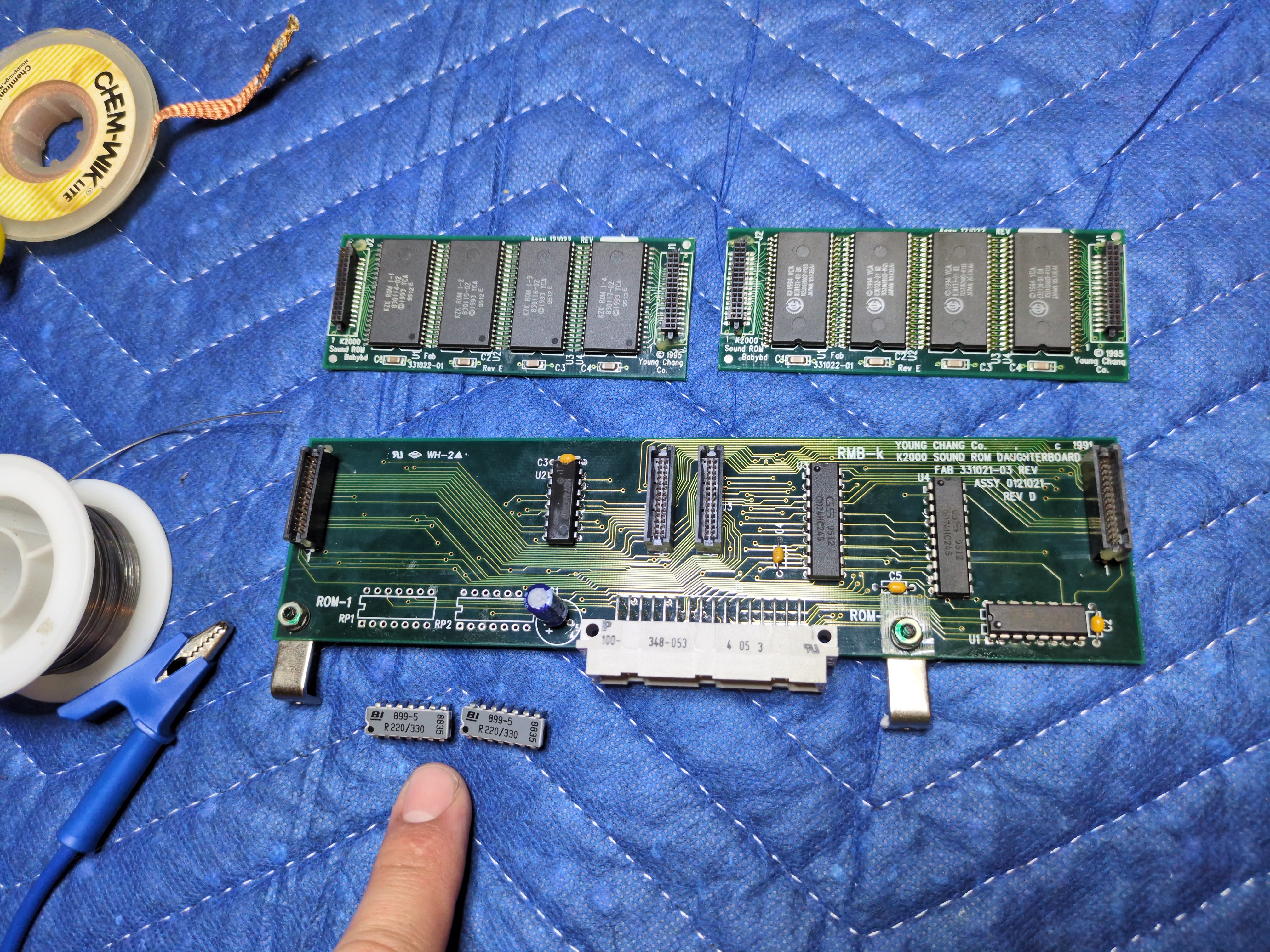
Customer Report
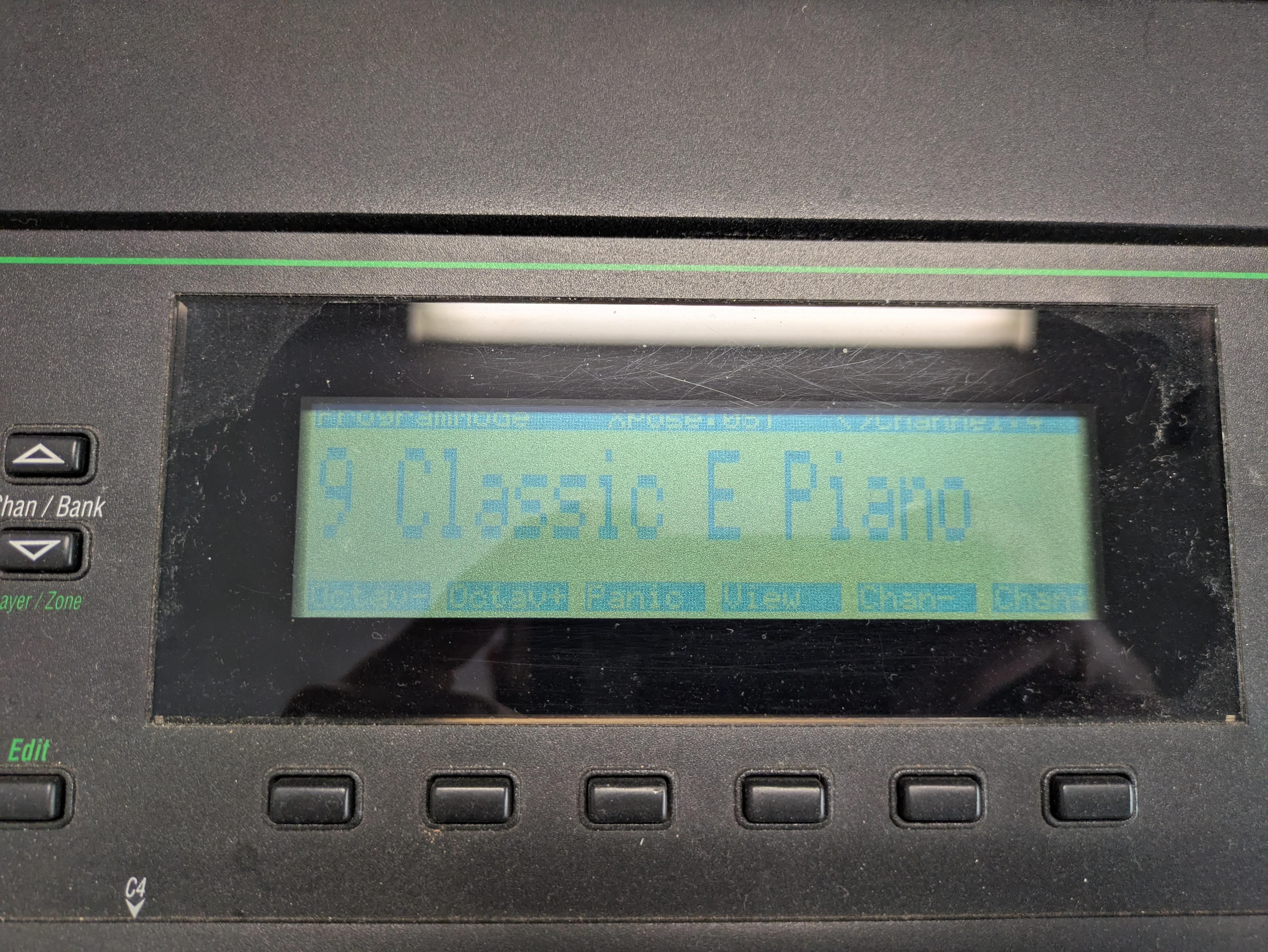
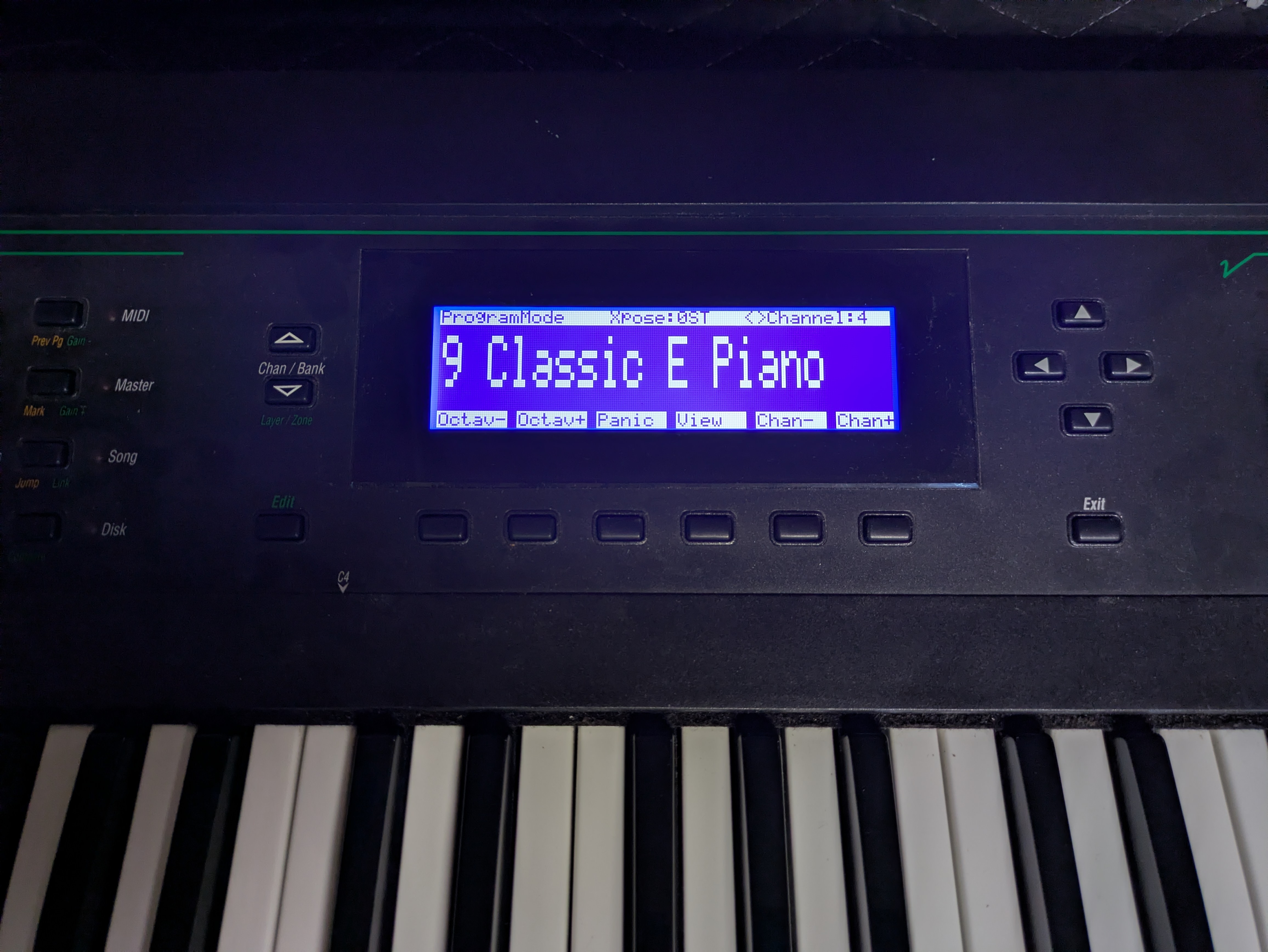
Display is too dim to use, requests new display. Also wants some diagnostic testing done, has had a few soft resets out of nowhere.
Pre-fulfillment Notes
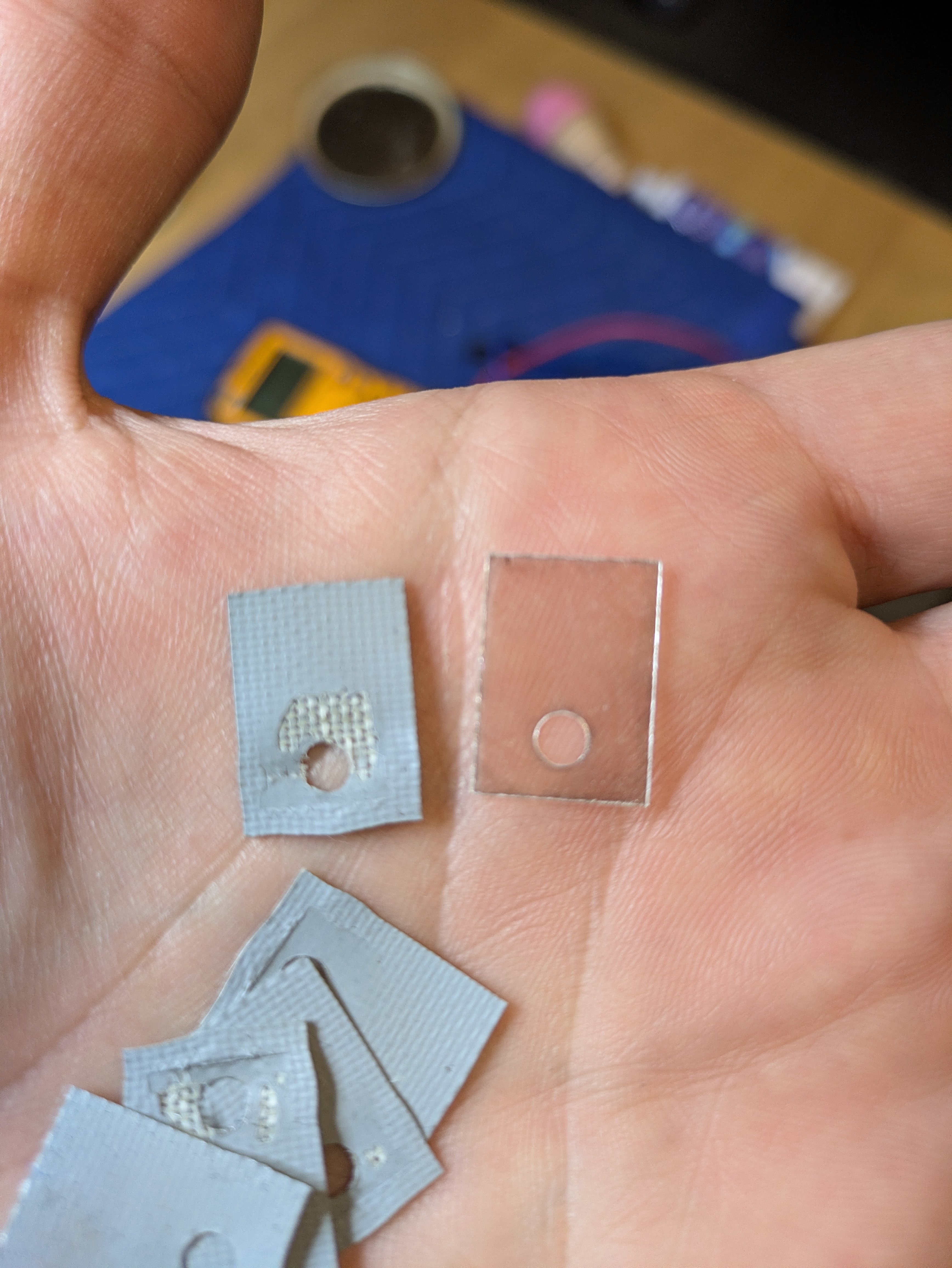
Kurzweil K2vx (enhanced K2000 variant) exhibiting common age-related symptoms: severely dim original CCFL-backlit LCD and occasional unexplained soft resets. Previous partial CMOS battery/capacitor work showed signs of incomplete execution. Daughterboard contained a short circuit and degraded resistor arrays.
Operations Performed
- Thermal and Mechanical Repairs:
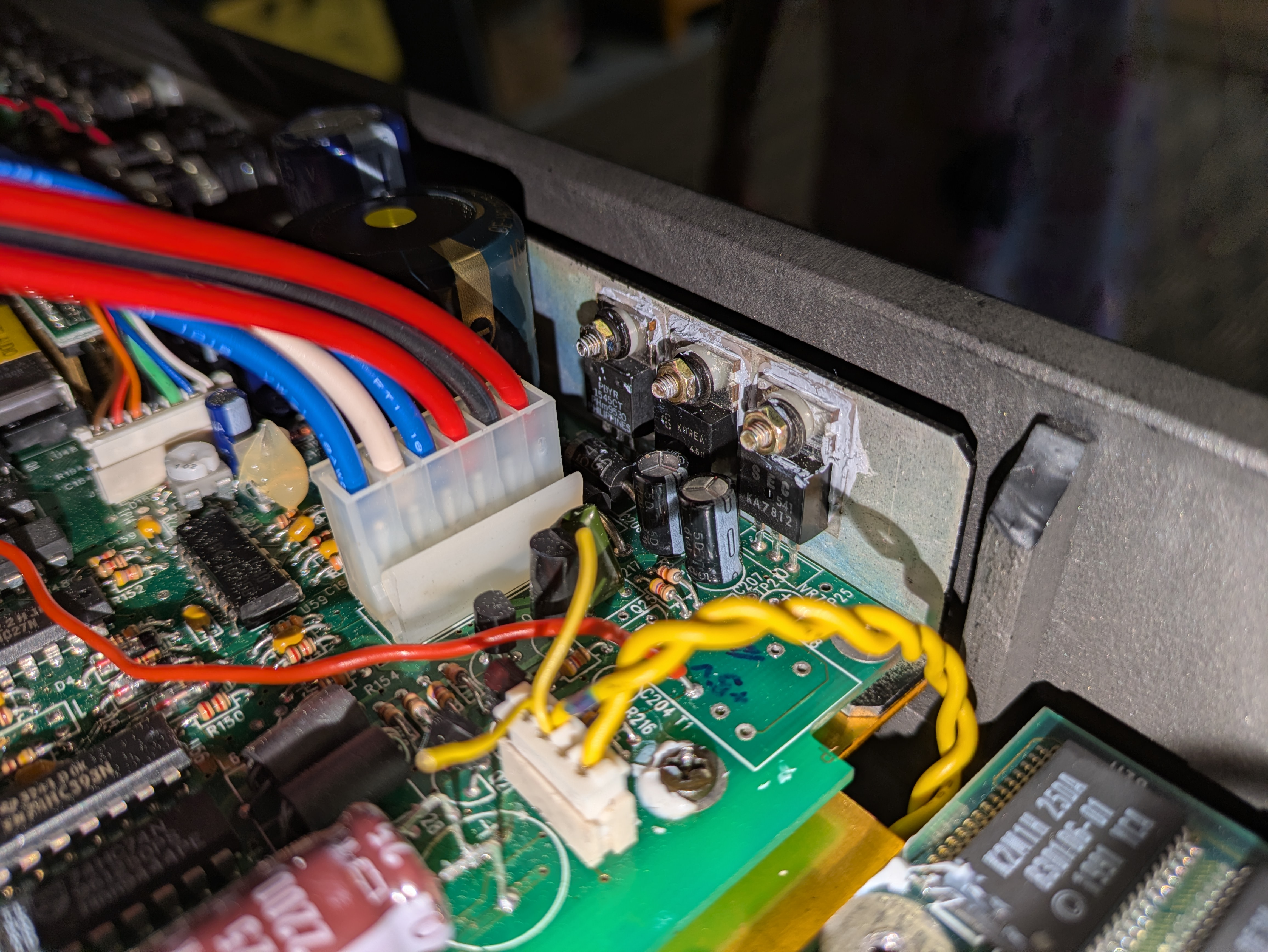
- Replaced badly worn vinyl insulators with new mica insulators (and fresh thermal paste)
- Touched-up incomplete CMOS backup capacitor replacement from previous technician (C203)
- Filled stripped PCB screw holes under main engine PCB
- Display Upgrade:
- Removed T1 and associated circuitry for old CCFL backlight
- Installed new LED-based LCD screen (NHD-24064WG-ATMI-VZ#) with custom wiring harness
- Adjusted contrast potentiometer (R153) and verified in on-board memory
- Daughterboard Repair:
- Located and cleared short on daughterboard 0121021
- Replaced two failed resistor arrays
- Additional Stabilization:
- Applied new copper shielding tape in critical areas
Post-fulfillment Notes
Instrument now features bright, evenly illuminated LED-backlit display with crisp contrast and no backlight-related dimming. Daughterboard short eliminated and resistor arrays renewed, greatly improving reliability. Thermal path refreshed and shielding improved to reduce susceptibility to noise/interference. Occasional soft resets appear resolved through combined power stability, backup capacitor integrity, and shielding enhancements. Unit returned to excellent, fully playable condition typical of a well-serviced Kurzweil K2vx.
Yamaha DX7 Repair
Serial#: 67648
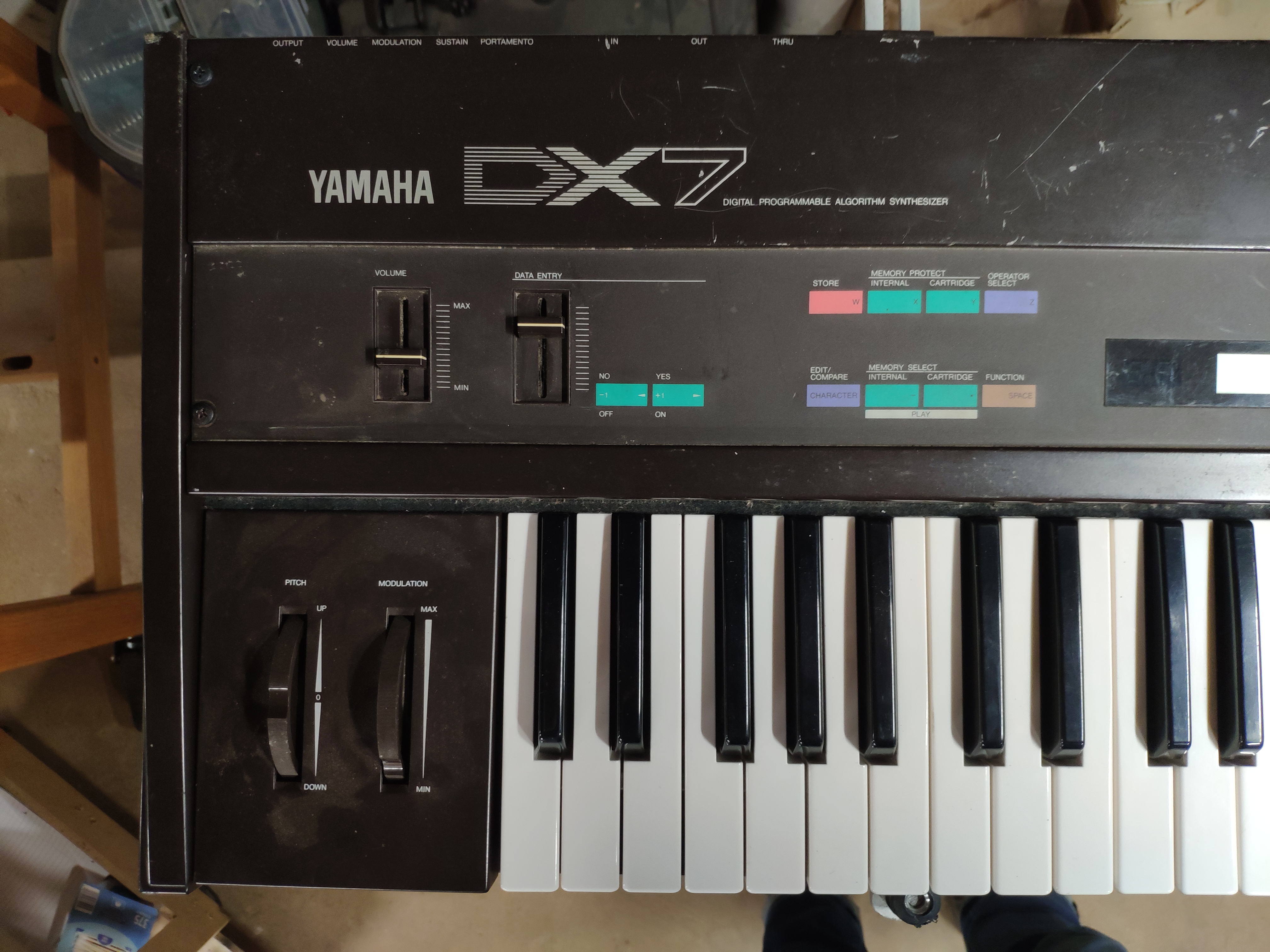
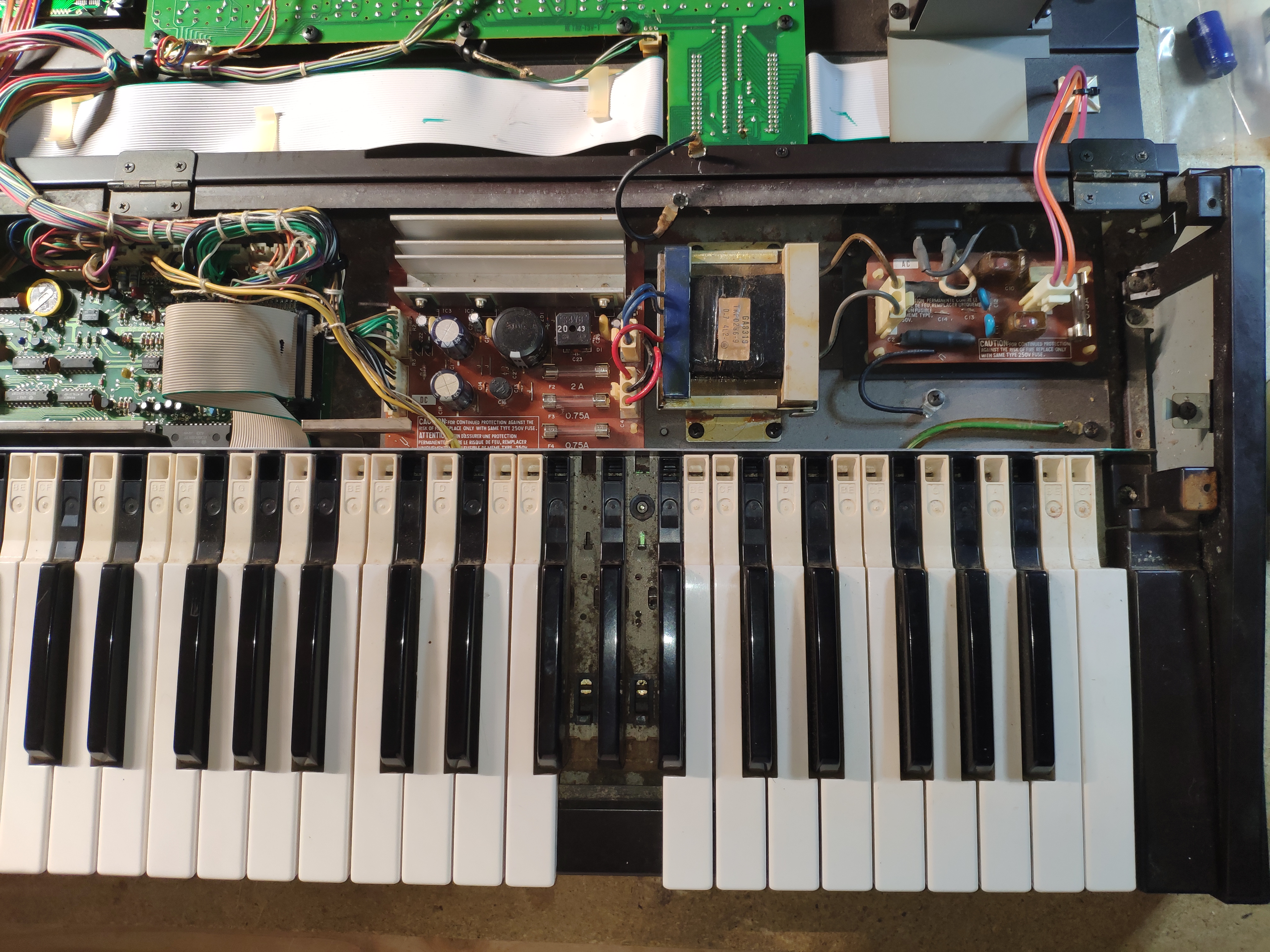
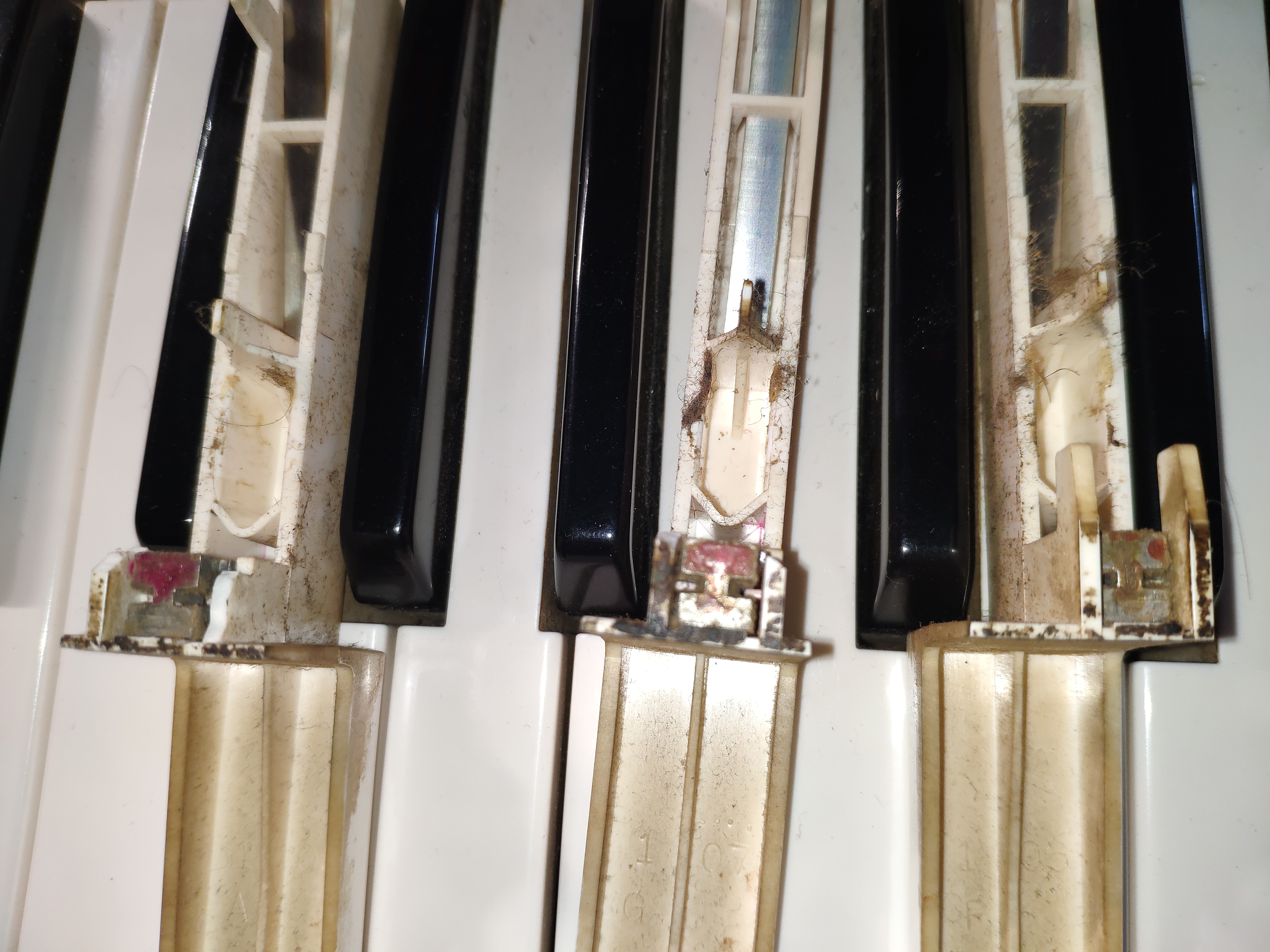
Customer Report
Unit hadn’t been powered on in some time (customer unsure if capable of power-up), the CR2032 battery may have already been replaced. Past repairmen have been unable to resolve the problem, but unsure what the problem was because it was so long ago. Also, two keys (G4 and A5) were popping up from the keybed.
Pre-fulfillment Notes
Unit powered on immediately without error. Patch #25 button not making contact. No sound is produced by any of the preset patches. I suspect the RAM has been wiped and the patches are all blank. Confirmed by reinitializing patch #10, which produced a sine wave through the headphone jack. Eb5 not producing any sound, key appears unbroken. G4 and A5 keys were removed, plastic tabs are broken, need to be replaced. Volume slider is crackling, needs cleaning. Significant dirt and dust beneath keybed, significant dirt on sides of keys. Reflashing the RAM will be necessary to ensure full functionality of all features. Data Entry fader non-responsive. I don’t have access to a breath controller, unsure if this function can be confirmed as working.
Operations Performed
- Replaced G4 and A5 keys
- RAM reloaded (MIDI Sysex)
- Eb5 contacts reattached with jumper wire
- Volume/Data faders cleaned with Deoxit
- Data fader reattached to wiring harness (solder pads have been previously burned off?)
- #25 Touch Key fixed (Actual tactile button confirmed as working away from PCB, but 1/100 times #25 doesn’t seem to respond. Wiring harness suspected. Works as of completion, but keep an eye on it.)
- Deep-cleaned keys and keybed
Post-fulfillment Notes
Wiring harness for #25 touch key should be monitored for potential future issues due to intermittent response.
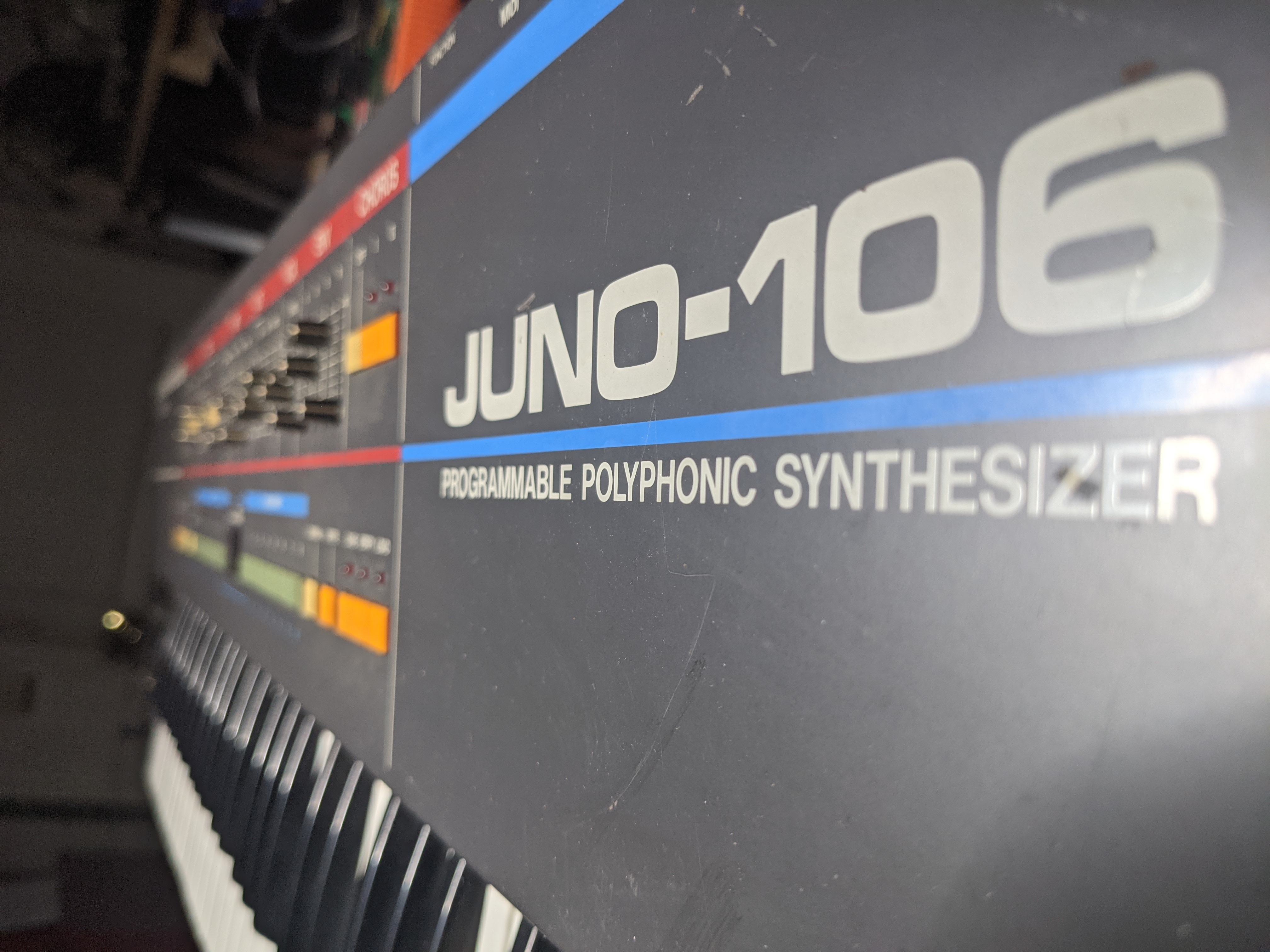
Roland Juno 106 Repair
Serial#: 510160
Customer Report
Voice chip issues, 3 broken faders. Also requests replacement of 2-prong IEC with 3-prong IEC.
Pre-fulfillment Notes
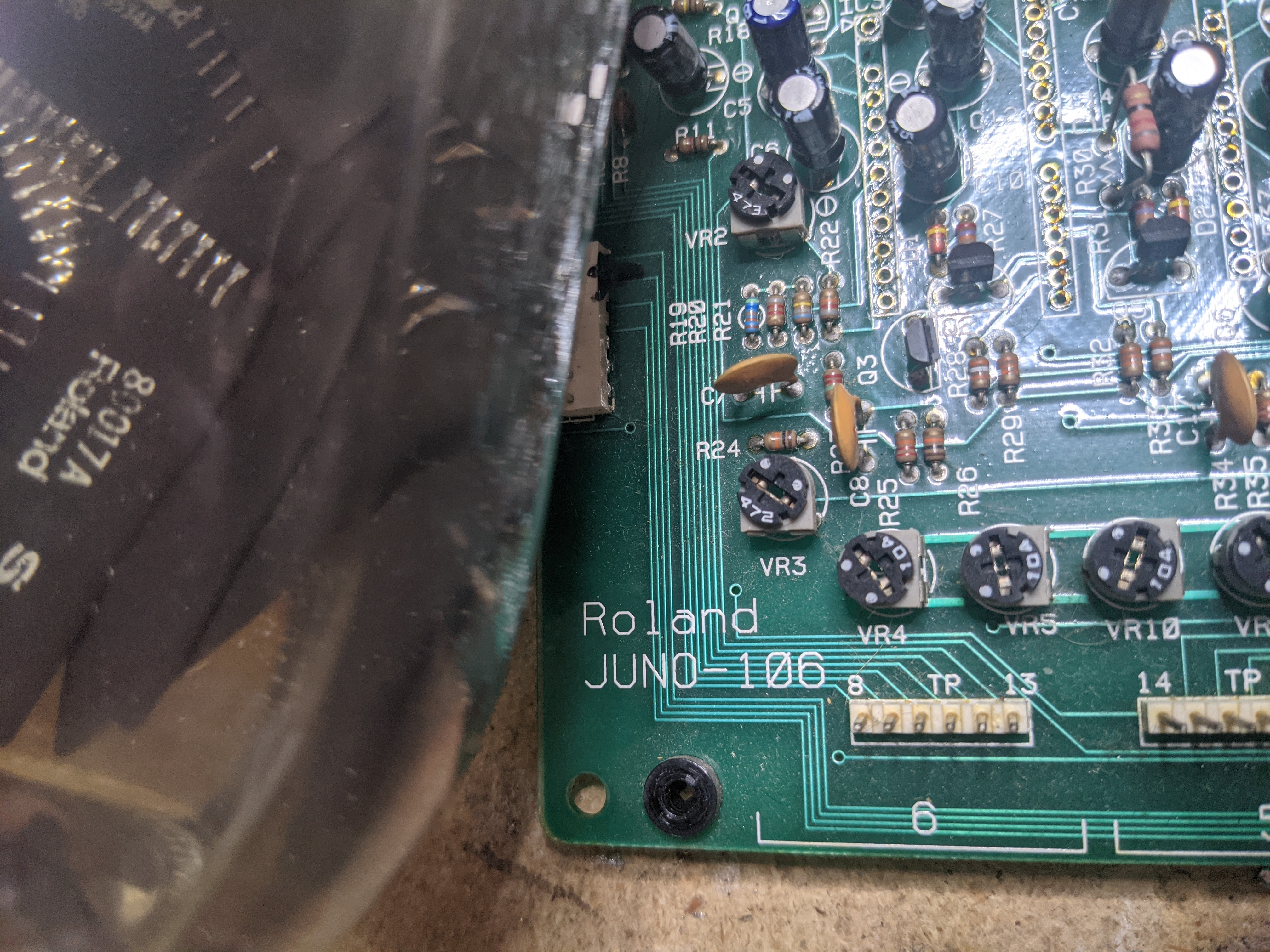
Replaced 2-prong IEC with 3-prong IEC and grounded chassis. Stripped voice and filter chips with acetone and picks over 48 hours; filter chips did not survive the process, voice chips responded well. Installed 3x Analogue Renaissance replacement D5534A filter chips, reinstalled voice chips. Ended up replacing Voice 5 Chip with Analogue Renaissance 80017A. Replaced 3x 10k faders (LFO, LFO Delay, Sub). VCF fader replaced. Replaced 3x 4052BP multiplexer chips with modern equivalents, installed sockets. Replaced 3x 4051BP multiplexer chips with modern equivalents, installed sockets. Air-dusted and cleaned. Calibration and burn-in performed.
Operations Performed
- Replaced 2-prong IEC with 3-prong IEC and grounded chassis
- Stripped voice and filter chips with acetone and picks over 48 hours
- Installed 3x Analogue Renaissance D5534A filter chips
- Reinstalled voice chips
- Replaced Voice 5 Chip with Analogue Renaissance 80017A
- Replaced 3x 10k faders (LFO, LFO Delay, Sub)
- Replaced VCF fader
- Replaced 3x 4052BP multiplexer chips with modern equivalents, installed sockets
- Replaced 3x 4051BP multiplexer chips with modern equivalents, installed sockets
- Air-dusted and cleaned
- Performed calibration and burn-in
Post-fulfillment Notes
Recommend replacement of remaining 4000-series ICs as a matter of future-proofing. High-quality sockets also recommended.
Rhodes Seventy-Three Electric Piano Repair
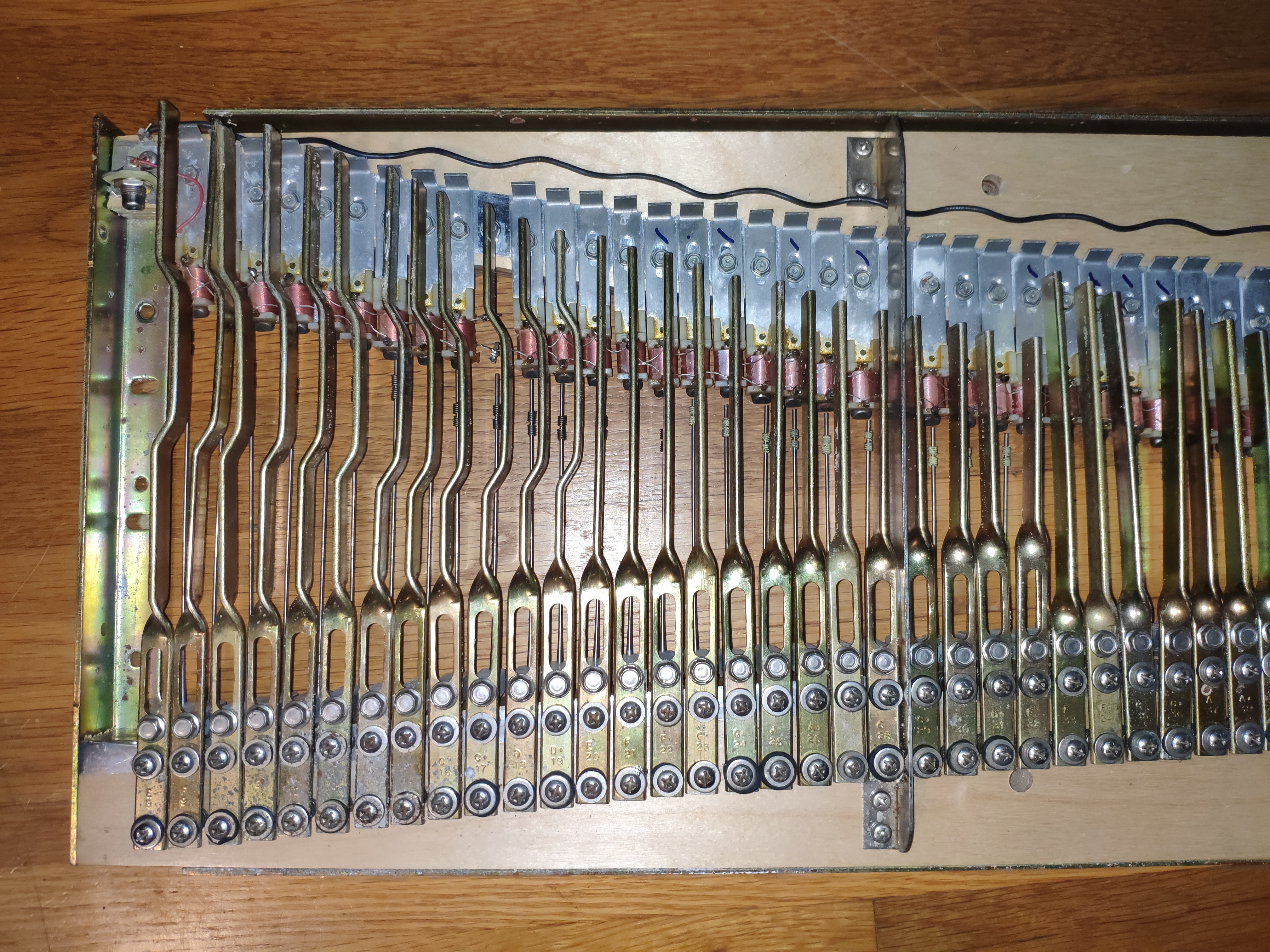
Serial#: 756084
Customer Report
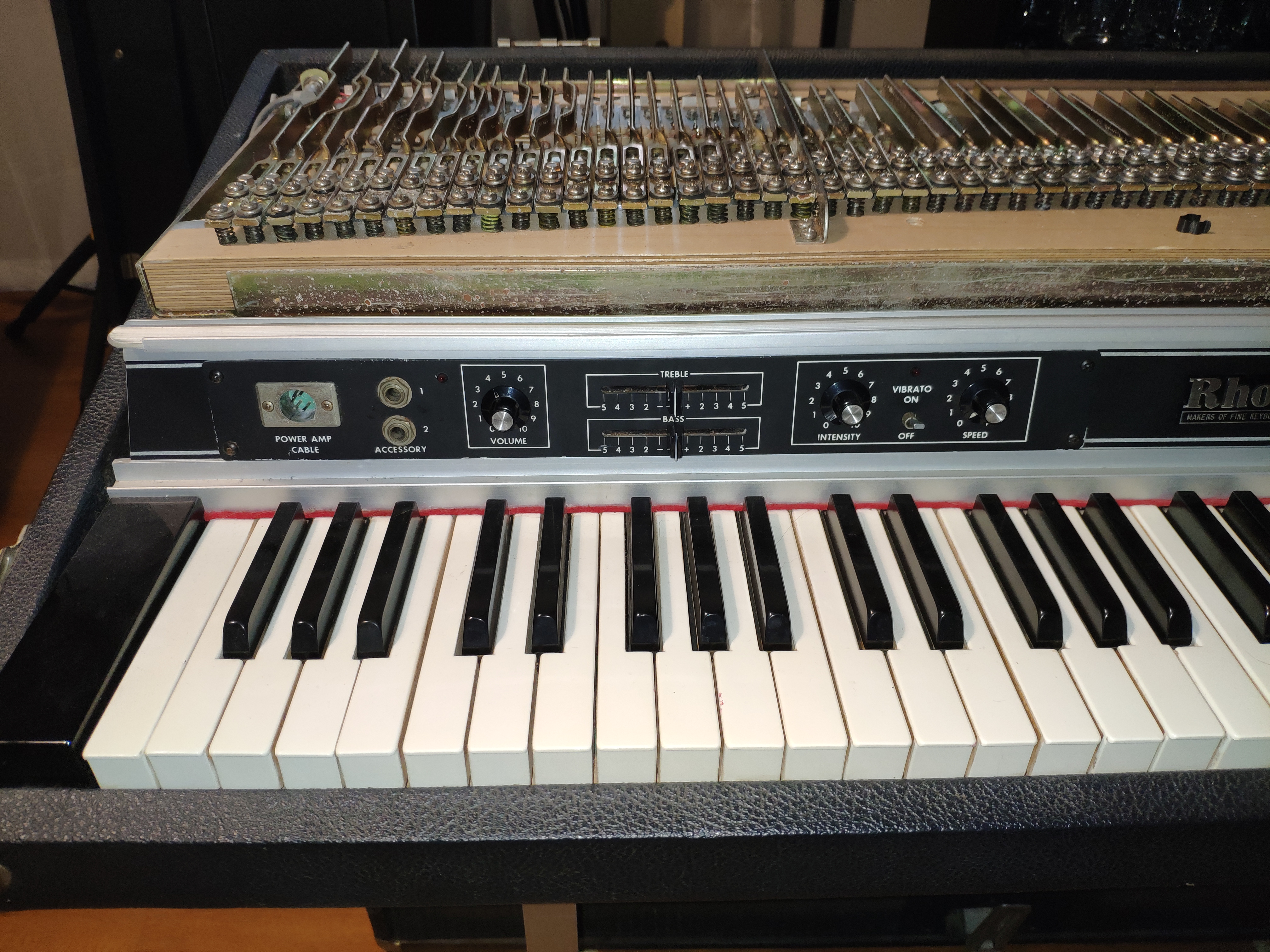
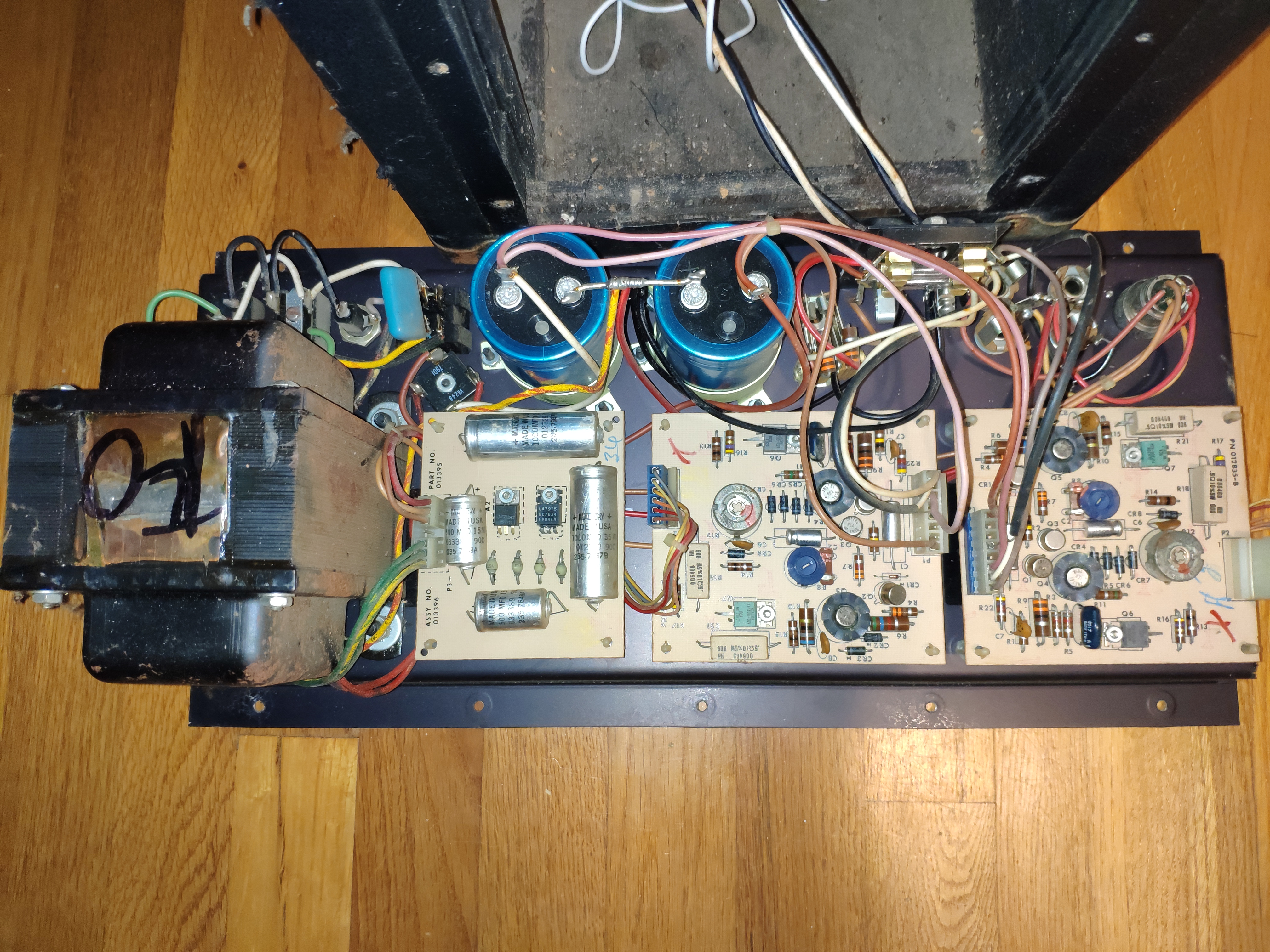
Rhodes was found in a trailer, multiple dead pickups, missing kickplate, non-functioning sustain pedal, amplifier fizzles out seconds after turning on.
Pre-fulfillment Notes
Air-dusted keybed, minor key cleaning. 14 new pickups installed. Sustain pedal re-attached. New kickplate installed. Tuned harp, leveled keybed, regulated action, voiced tines. Amplifier presented cold solder joints, reflowed all Molex connections. Replaced 2 of 4 power transistors. Installed new Mica transistor insulators and thermal paste. Replaced harp hinge hardware. DeOxed EQ faders. Pre-amplifier functions normally as is.
Operations Performed
- Air-dusted keybed and performed minor key cleaning
- Installed 14 new pickups
- Re-attached sustain pedal
- Installed new kickplate
- Tuned harp
- Leveled keybed
- Regulated action
- Voiced tines
- Reflowed all Molex connections in amplifier
- Replaced 2 of 4 power transistors
- Installed new Mica transistor insulators and thermal paste
- Replaced harp hinge hardware
- DeOxed EQ faders
Post-fulfillment Notes
Pre-amplifier functions normally; no further action required at this time.
Sequential Circuits Prophet 5 Repair
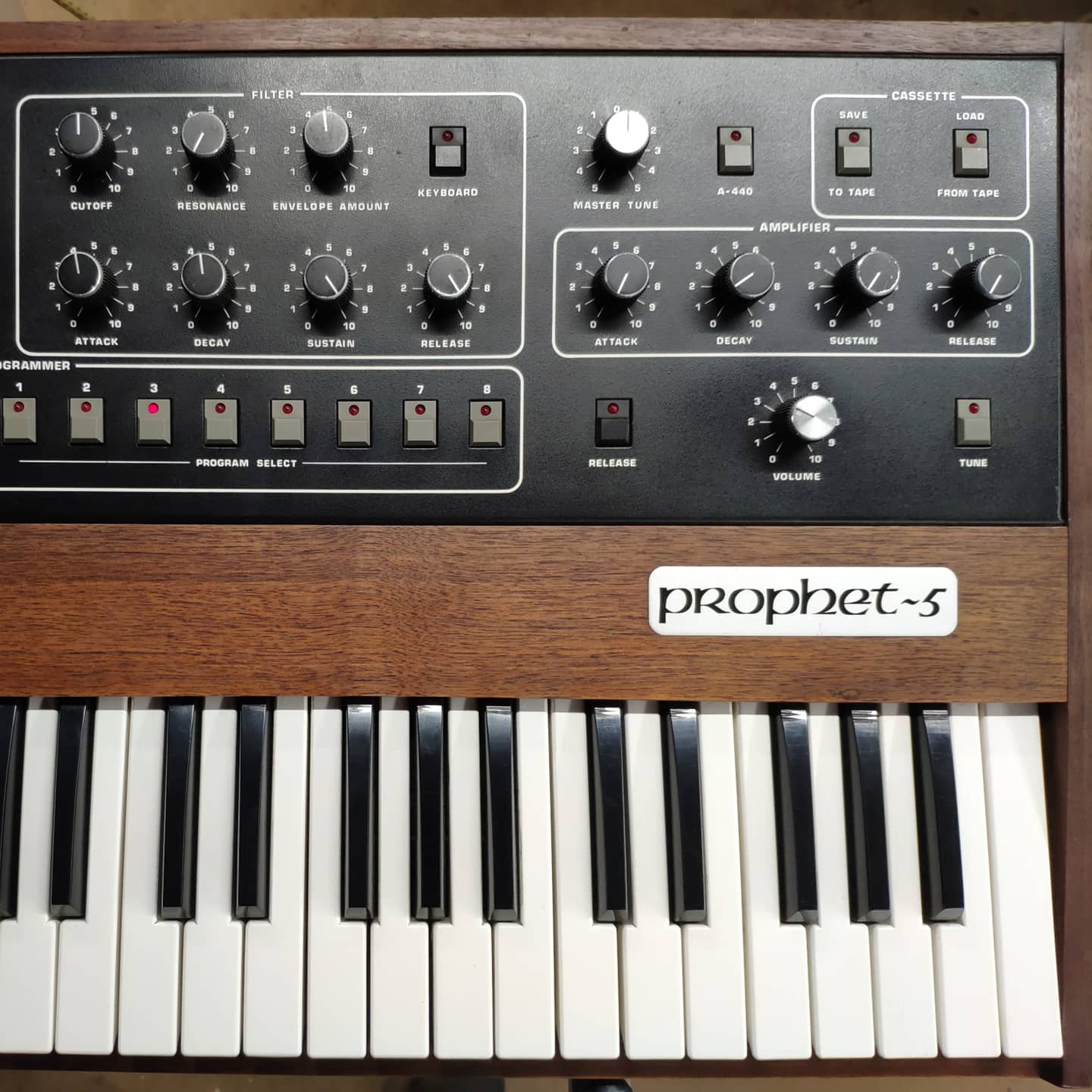
Serial#: 1000-3338
Customer Report
Oscillator A not functioning properly. Requests calibration after oscillator fix.
Pre-fulfillment Notes
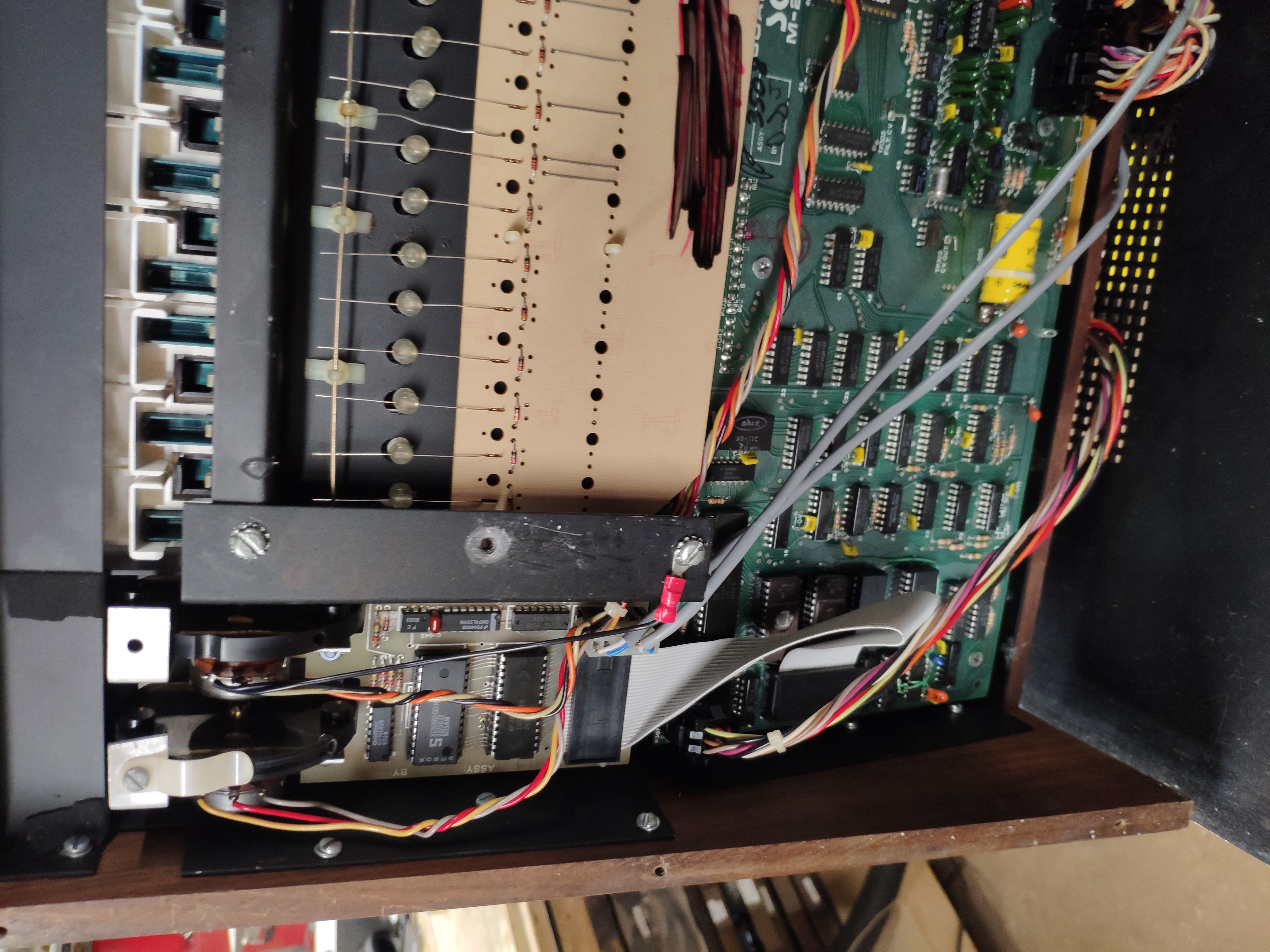
Rev. 3.3 updates have been previously performed by a different tech, double-checked all steps according to the service manual. MEM TEST (TP304) does not initiate memory test when tied to +5V on boot-up. The Noise Oscillator was suddenly lost a few hours into inspection, in addition to the missing OSC A. Recommended full re-cap of the power supply and replacement of all tantalum capacitors on boards 2, 3, 4, and 5. Recommended full 4000-series IC chip replacement as a matter of future-proofing.
Operations Performed
- Double-checked Rev. 3.3 updates per service manual
- Performed full re-cap of power supply
- Replaced all tantalum capacitors on boards 2, 3, 4, and 5
- Installed high-quality machined sockets for ICs
- Replaced 8 TL082/072 ICs, including sockets
- Replaced 7 2N4250 germanium transistors (6 in Patch CV Demultiplexer S/H section of SD333, 1 on OSC A Voice 2) with PN4250A silicon equivalents
- Replaced Q306 and Q305 (governing MIX OSC A CC and MIX NOISE CC)
- Replaced 3 select polystyrene capacitors with poly-film equivalents
- Performed all tests outlined in the service manual
- Restored factory patches via MIDI Sysex
Post-fulfillment Notes
Recommended full 4000-series IC chip replacement for future-proofing.